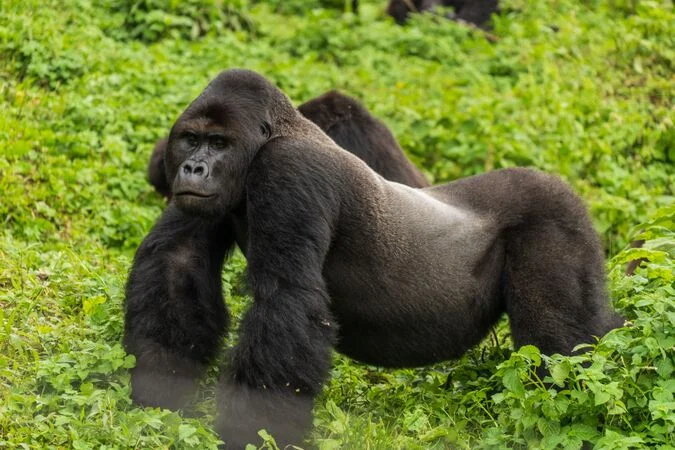
Eastern Lowland Gorilla Top Facts: Habitat, Weight, Size, & more
The Eastern Lowland Gorilla, also known as Grauer’s gorilla, is the largest of all gorilla subspecies and is found only in the forests of eastern Democratic Republic of Congo, DRC.
These magnificent primates, with their impressive size and gentle nature, represent one of our closest living relatives in the animal kingdom. Yet, they face severe threats, and their population has plummeted dramatically in recent decades.
Classified as Critically Endangered, the Eastern Lowland Gorilla stands as a powerful symbol of both wildlife resilience and the urgent need for conservation in conflict-affected regions.
This comprehensive guide explores everything you need to know about these extraordinary apes—from their physical characteristics and daily behaviors to their habitat, diet, and the critical conservation challenges they face.
Whether you’re a wildlife enthusiast planning an African safari or simply curious about these gentle giants, understanding the Eastern Lowland Gorilla highlights why protecting their shrinking world matters for biodiversity and our shared future.
Scientific Classification
The eastern lowland gorilla scientific name is Gorilla beringei graueri. It belongs to the family Hominidae, which includes humans, chimpanzees, bonobos, and other great apes. As a subspecies of the Eastern Gorilla (Gorilla beringei), it shares a close genetic relationship with the Mountain Gorilla (Gorilla beringei beringei).
This classification underscores their place among the most intelligent and socially complex primates. Genetic studies show that gorillas share approximately 98% of their DNA with humans, explaining many behavioral parallels, such as strong family bonds, tool use in some contexts, and complex communication through vocalizations and gestures.
Physical Characteristics
Eastern Lowland Gorillas rank as the largest gorilla subspecies, showcasing robust builds adapted to their forest environment. Adult males, known as silverbacks due to the distinctive gray hair on their backs that develops with maturity, can weigh up to 440 pounds (around 200 kg) or more in exceptional cases, with some reports of individuals approaching 600 pounds in the wild or captivity. Females are significantly smaller, typically weighing 150–200 pounds (68–90 kg).
Eastern lowland gorilla height & size
In terms of size and height, males stand approximately 5.5 to 6 feet (1.7–1.8 meters) tall when upright on two legs, though they primarily move on all fours using knuckle-walking.
Their arm span can reach an impressive 8 feet or more, aiding in climbing and foraging. They feature a broad chest, large hands and feet, a short muzzle, and darker fur compared to some other gorilla types. Their fur is shorter than that of Mountain Gorillas, with narrower faces and rounder nostrils as distinguishing traits.
These physical attributes contribute to their immense strength—estimated to be several times that of a human—while their stocky build supports a largely herbivorous lifestyle in dense vegetation. Despite their size, they move with surprising grace through the undergrowth.
Eastern Lowland Gorilla weight and muscular frame make them formidable yet peaceful inhabitants of their habitat. Their large hands help manipulate tough plant material, while powerful jaws process fibrous foods efficiently.
Eastern lowland gorilla Habitat & Distribution
Where do Eastern Lowland Gorillas live? They are endemic to the eastern Democratic Republic of the Congo, primarily inhabiting lowland tropical rainforests, transitional forests, and areas up to montane zones between 600 and 2,900 meters above sea level.
Key strongholds include Kahuzi-Biéga National Park, Maiko National Park, the Tayna Gorilla Reserve, the Usala forest, and the Itombwe Massif.
Their eastern lowland gorilla habitat consists of dense, humid forests rich in diverse vegetation. Unlike Mountain Gorillas, which thrive in higher, cooler altitudes with more bamboo, Eastern Lowland Gorillas occupy a broader range of lowland and mid-elevation environments, including swamps and peat bogs in some areas.
Tragically, their current range occupies only about 13% of their historic distribution due to decades of habitat fragmentation.
These forests provide not only food but also nesting sites, as gorillas construct fresh nests each night from branches and leaves for sleeping.
Diet: What Do Eastern Lowland Gorillas Eat?
Eastern Lowland Gorillas are primarily herbivorous, spending much of their day foraging and feeding. Their diet includes leaves, stems, pith, bark, vines, fruits, and occasionally insects like ants.
Fruit forms a significant portion—up to 25% or more seasonally—making them more frugivorous than Mountain Gorillas, whose diet leans heavier on foliage in higher altitudes.
They consume a wide variety of plant species, adapting to seasonal availability. In fruit-abundant periods, they prioritize energy-rich fruits; otherwise, they fall back on herbaceous vegetation. This dietary flexibility influences their ranging patterns, with groups moving daily to exploit food resources.
An adult silverback may consume up to 40–50 pounds of vegetation daily to sustain its massive body. Their digestive system, with a large stomach for fermenting fibrous material, efficiently processes this plant-based diet. While mostly vegetarian, opportunistic insect consumption supplements nutrients.
Behavior & Social Structure
Eastern Lowland Gorilla behavior reflects a peaceful, highly social lifestyle. They live in stable family groups, typically consisting of one dominant silverback male, multiple adult females, and their offspring. Group sizes range from a few individuals to over 30, with an average around 10.
The silverback serves as the leader, protector, and decision-maker, guiding the group to feeding and nesting sites while defending against threats. Females and young engage in grooming, play, and close social interactions that strengthen bonds. Younger males eventually emigrate to form their own groups or join others.
Daily routines involve morning feeding, midday resting and socializing, and afternoon foraging before building new nests for the night. They communicate through vocalizations (hoots, grunts, roars), body postures, and facial expressions. Despite their strength, they are generally gentle and shy, avoiding unnecessary conflict.
Are Eastern Lowland Gorillas aggressive? Not inherently. They display aggression mainly when threatened, protecting their group, or during inter-group encounters involving competing silverbacks. Most interactions within and between groups remain non-violent, highlighting their intelligent and tolerant nature.
Eastern Lowland Gorilla vs Mountain Gorilla
A common query is the difference between eastern lowland and mountain gorilla. Both belong to the Eastern Gorilla species (Gorilla beringei), but key distinctions set them apart:
- Size: Eastern Lowland Gorillas are generally larger and more robust, with males reaching higher weights (up to 440+ pounds) compared to Mountain Gorillas (typically 300–485 pounds, with averages lower).
- Habitat: Lowland gorillas inhabit denser, lower-elevation tropical rainforests with more fruit availability. Mountain Gorillas live in cooler, high-altitude montane and bamboo forests of the Virunga region.
- Location: Eastern Lowland Gorillas are restricted to eastern DRC. Mountain Gorillas occur in the Virunga Mountains shared by Rwanda, Uganda, and DRC, plus Bwindi Impenetrable National Park in Uganda.
- Fur and Appearance: Lowland gorillas have shorter fur suited to warmer climates; Mountain Gorillas possess thicker, longer fur for insulation against cold and wet conditions.
- Diet: Lowland varieties consume more fruit; Mountain Gorillas rely more on leaves, stems, and bamboo.
- Trekking Availability: Mountain Gorilla trekking is well-established and popular in Rwanda and Uganda, with habituated groups and strict permitting systems supporting conservation funding. Eastern Lowland Gorilla tourism remains limited due to security concerns in DRC, though habituated groups exist in Kahuzi-Biéga National Park.
These differences stem from evolutionary adaptations to distinct environments, yet both subspecies share core social structures and gentle temperaments.
Conservation Status
The Eastern Lowland Gorilla is listed as Critically Endangered on the IUCN Red List. Their population has declined sharply, with estimates indicating a drop of more than 50% since the mid-1990s, when numbers hovered around 17,000.
Current figures suggest fewer than 6,000 individuals remain, with some surveys pointing to 3,800–6,800 as of recent years. Ongoing decline continues at roughly 5% annually in some areas.
How many Eastern Lowland Gorillas are left? Reliable 2026 estimates place the wild population below 6,000, fragmented across isolated pockets.
This makes them far rarer than Western Lowland Gorillas and highlights their precarious status compared to the recovering Mountain Gorilla population (over 1,000).
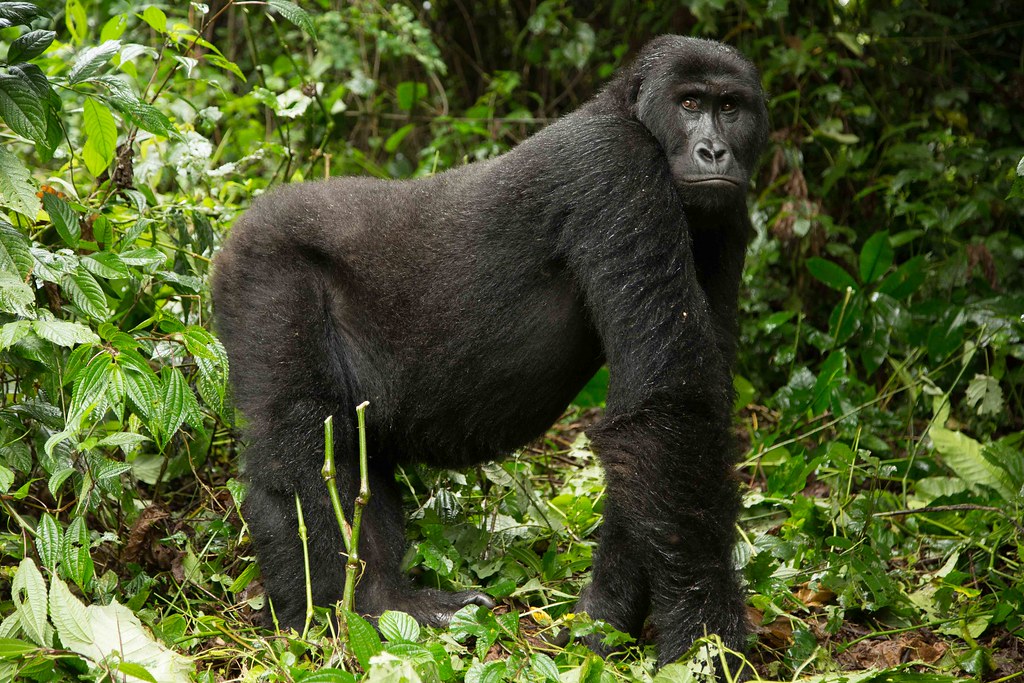
Why Eastern Lowland Gorilla Is Endangered of Extinction
Why are Eastern Lowland Gorillas endangered? Primary threats include:
- Habitat loss and fragmentation: Logging, agriculture, and illegal mining destroy and divide forests. The subspecies now occupies only a fraction of its former range.
- Poaching: Bushmeat hunting and capture of infants for the illegal pet trade persist, exacerbated by poverty and conflict.
- Civil unrest and conflict: Decades of militia activity in eastern DRC disrupt protection efforts, displace communities into gorilla habitats, and fuel resource exploitation.
- Disease: Human diseases, to which gorillas have low immunity, spread through close contact or contaminated environments.
- Mining: Artisanal mining for coltan, tin, and gold attracts workers who hunt gorillas and degrade habitat.
These pressures compound in a region with limited infrastructure and enforcement capacity.
Eastern Lowland Gorilla Population & Numbers
Eastern Lowland Gorilla population trends show alarming decline. From an estimated 17,000 in the 1990s, numbers fell significantly by the 2010s, with recent assessments confirming continued losses.
Isolated populations, such as in parts of Virunga National Park, have dwindled to single-digit figures in extreme cases, though reintroduction efforts offer glimmers of hope.
Conservation monitoring relies on nest counts, camera traps, and community reports due to the challenging terrain and security issues.
Can You See Eastern Lowland Gorillas? Where to See Them
Tourism access to Eastern Lowland Gorillas remains limited compared to Mountain Gorilla experiences in Rwanda or Uganda, primarily due to security considerations in the DRC.
However, Kahuzi-Biéga National Park serves as the premier destination for visitors. Here, habituated groups allow for guided gorilla trekking, typically involving hikes of 1–4 hours.
Permits cost around USD 400 per person, with small groups (max 8 visitors) spending one hour observing the gorillas. Trekking occurs year-round but is best in drier seasons. The experience offers a raw, less commercialized encounter in vast primary forests.
For those planning safaris, combining a Congo visit with gorilla trekking in Uganda or Rwanda gorilla trekking provides a broader perspective on Eastern Gorilla subspecies. Always book through reputable operators prioritizing safety and ethical practices.
Eastern Lowland Gorilla trekking supports local economies and funds park patrols, though infrastructure and accessibility lag behind neighboring countries.
Threats & Conservation Efforts
Beyond the core threats, conservation organizations like the Dian Fossey Gorilla Fund, WWF, and local NGOs work tirelessly in protected areas. Efforts include anti-poaching patrols, habitat restoration, community education, and alternative livelihood programs to reduce dependence on forest resources.
Kahuzi-Biéga and other reserves benefit from international support, yet ongoing conflict poses persistent challenges. Community-based initiatives, such as those involving former hunters in monitoring or tourism, show promise. Reintroduction programs for orphaned or rescued gorillas aim to bolster small populations.
Interesting Facts
- Largest gorilla subspecies: Their size sets them apart among great apes.
- They can stand upright briefly, though knuckle-walking dominates locomotion.
- DNA similarity: Sharing ~98% genetic material with humans, they exhibit advanced cognition, emotions, and social intelligence.
- Groups build new nests nightly, demonstrating problem-solving skills.
- Infants ride on mothers’ backs for years, fostering strong family ties.
- They have unique fingerprints, like humans.
These traits highlight their sentience and evolutionary closeness to us.
FAQs – Eastern Lowland Gorilla
What is an Eastern Lowland Gorilla?
It is the largest subspecies of gorilla (Gorilla beringei graueri), also called Grauer’s gorilla, native to eastern DRC forests.
Where do they live?
Exclusively in the lowland and mid-elevation forests of eastern Democratic Republic of the Congo.
Are they endangered?
Yes, Critically Endangered, with a rapidly declining population due to habitat loss, poaching, and conflict.
Can tourists see them?
Yes, primarily through limited trekking in Kahuzi-Biéga National Park, though access requires careful planning for safety.
Eastern Lowland Gorilla scientific name?
Gorilla beringei graueri.
Eastern Lowland Gorilla size/height/weight?
Males: up to 440+ lbs, ~5.5–6 ft tall when standing. Robust build with broad chest.