
Bwindi Impenetrable National Park is a UNESCO World Heritage Site, a biological ark of extraordinary richness, and the single most important mountain gorilla sanctuary on earth. In 2026, when the global mountain gorilla population has recovered to just over 1,000 individuals from fewer than 700 a decade ago, roughly half of those gorillas live in Bwindi making this forest not only Uganda’s greatest wildlife destination but one of the most consequential conservation success stories of the twenty-first century.
Whether you are planning your first gorilla trekking safari in Uganda, comparing Bwindi to Rwanda’s Volcanoes National Park, researching permit costs and booking rules for 2026, or simply trying to understand what makes this forest so extraordinary, this guide covers everything you need to know.
Bwindi Impenetrable National Park Location and Overview
Bwindi Impenetrable National Park is located in the extreme southwestern corner of Uganda, in the Albertine Rift Valley along the border with the Democratic Republic of the Congo.
The park is shared across three districts, Kanungu in the north, Kisoro in the south, and Kabale in the east and sits within the broader landscape of the Kigezi Highlands, one of the most densely populated and most dramatically terraced agricultural regions in all of Africa.
The park covers 331 square kilometres of montane and lowland tropical rainforest, spanning an altitude range from 1,160 metres above sea level in the valleys to 2,607 metres at the highest ridgelines.
This elevation gradient creates a remarkable ecological diversity, from the warm, humid lowland forest at the park’s base to the Afromontane vegetation, bamboo zones, and high-altitude moorland at its upper reaches.
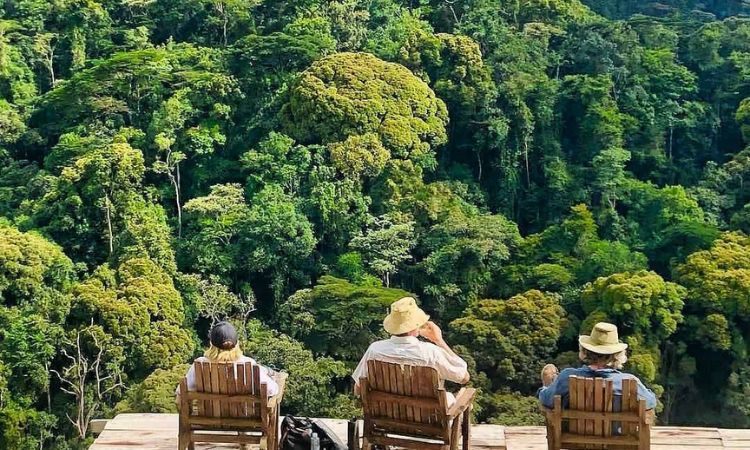
Bwindi Impenetrable Forest National Park was established in 1991 as a national park under Uganda’s National Parks Act and was inscribed as a UNESCO World Heritage Site in 1994 in recognition of its exceptional biodiversity and its critical importance to mountain gorilla conservation.
The park’s ancient geological character — it survived the last Ice Age as a refugium when surrounding areas became too cold and dry for forest — explains why it harbours more tree species, more fern species, and more primate species than almost any comparable area of forest in Africa.
Mountain Gorillas of Bwindi: The World’s Most Important Gorilla Population
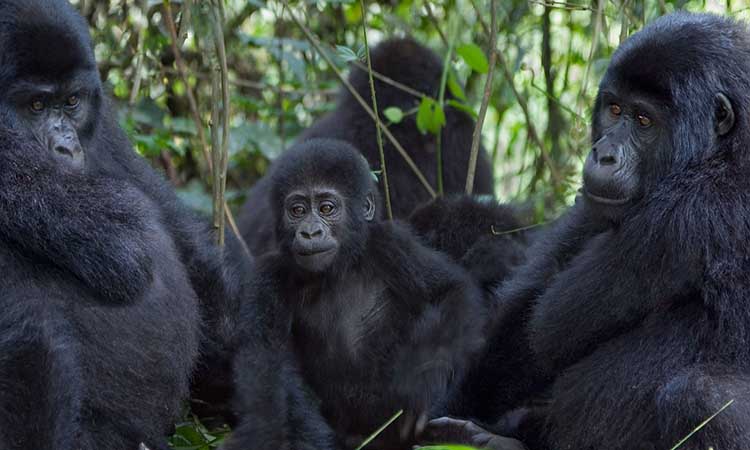
Bwindi Impenetrable National Park is home to approximately 459 mountain gorillas, representing roughly half of the world’s total mountain gorilla population of just over 1,000 individuals.
The park has more than 22 habituated gorilla families spread across its four trekking sectors, with new families periodically added to the habituation programme as the population grows and as the Uganda Wildlife Authority expands the tourism and research infrastructure.
The mountain gorilla (Gorilla beringei beringei) is classified as Endangered on the IUCN Red List — a significant improvement from its former Critically Endangered status, achieved precisely because of the sustained conservation investment that gorilla trekking tourism revenues fund.
At $800 per permit, approximately 75 percent of every gorilla trekking permit fee flows directly into gorilla conservation funding anti-poaching ranger patrols, veterinary care through the Gorilla Doctors programme, habitat protection, and the community revenue sharing that gives local families surrounding the park a direct financial stake in the gorillas’ survival.
Bwindi’s gorilla families are distributed across four trekking sectors, each with its own distinct character, terrain, and family portfolio.

Buhoma sector in the north is the original and most established trekking zone, home to the Mubare family, the first gorilla family ever habituated for tourism in Uganda alongside the Habinyanja, Rushegura, and Katwe families.
Ruhija sector in the east sits at the highest elevation, offers outstanding birding alongside gorilla trekking, and is home to the Bitukura, Oruzogo, and Kyaguriro families. Rushaga sector in the south has the largest number of habituated families including Nshongi, Kahungye, Bweza, Mucunguzi, Rwigi, Mishaya, Busingye, Bikingi, and Kutu — and is the only sector where the gorilla habituation experience in Bwindi is available.
Nkuringo sector in the south sits along the dramatic crater rim above the Congo Basin, with the Nkuringo, Christmas, and Bushaho families available for trekking through some of the most scenically spectacular terrain in the park.
Bwindi Gorilla Trekking Permit Cost in 2026
Gorilla trekking permits in Bwindi Impenetrable National Park are issued by the Uganda Wildlife Authority, the sole issuing body and must be booked in advance through a licensed Ugandan tour operator or directly through the UWA. As of March 1, 2026, the previous seven-day reservation hold system has been eliminated; full payment is required at the time of booking to confirm any gorilla permit.
The current Uganda gorilla trekking permit prices for 2026 are as follows:
Standard Gorilla Trekking Permit:
- Foreign non-residents: USD $800 per person per trek
- Foreign residents (valid Uganda work permit holders): USD $700 per person per trek
- African citizens (non-EAC): USD $500 per person per trek
- East African Community citizens: UGX 300,000 per person per trek
Gorilla Habituation Experience Permit (Rushaga sector only):
- Foreign non-residents: USD $1,500 per person — allows four hours with a semi-habituated gorilla family
- Foreign residents: USD $1,000 per person
- African citizens: USD $1,000 per person
- East African Community citizens: UGX 750,000 per person
Every gorilla trekking permit, at any price tier, covers park entry fees for the trekking day, the services of a professional UWA ranger guide, the advance tracking team that locates the gorilla family before your group enters the forest, and one full uninterrupted hour with the habituated gorilla family in their natural habitat. The permit does not cover accommodation, transport, meals, or porter fees.
About 160 permits are available daily across Bwindi Impenetrable National Park and Mgahinga Gorilla National Park combined.
A maximum of eight permits are issued per habituated gorilla group per day, a hard conservation limit that exists to protect the gorillas from the physiological stress of excessive human contact.
For peak season gorilla trekking in Bwindi during June to August and December to February, permits sell out months in advance therefore booking 6 to 10 months ahead is strongly recommended.
Comparing Uganda and Rwanda gorilla permit costs makes the value case for Bwindi immediately clear. Rwanda’s Volcanoes National Park charges USD $1,500 per person per trek year-round — the same price as Bwindi’s gorilla habituation experience, and nearly double the standard Bwindi permit.
A family of four trekking gorillas in Bwindi saves $2,800 in permit fees compared to the same experience in Rwanda, without any reduction in the quality or intimacy of the encounter.
Wildlife in Bwindi Impenetrable National Park
Bwindi Impenetrable National Park wildlife extends well beyond the mountain gorillas that define its global reputation. The park supports an extraordinary diversity of species across every taxonomic group, reflecting its status as one of the most biologically rich protected areas in Africa.
Among mammals in Bwindi, in addition to the mountain gorilla population, the forest supports chimpanzees, L’Hoest’s monkeys, red-tailed monkeys, black and white colobus monkeys, blue monkeys, olive baboons, African civets, African golden cats, side-striped jackals, giant forest hogs, bushbucks, forest elephants that move through the western sections, and a range of nocturnal species including pottos and bush babies detectable on guided night walks.

Over 220 butterfly species have been recorded in Bwindi, of which 8 are Albertine Rift endemics and 3 exist only within Bwindi’s forest boundaries, a degree of butterfly endemism that reflects the park’s extraordinary ecological isolation and biological age.
Birds of Bwindi: A Premier African Birding Destination
With over 360 bird species, Bwindi Impenetrable National Park is one of Uganda’s most important birding sites and is globally significant for Albertine Rift endemic species. Approximately 23 bird species are endemic to the Albertine Rift and found in Bwindi, including 7 species on the IUCN Red List of threatened species.
The best birding spots in Bwindi include the Buhoma Waterfall Trail, the Bamboo Zone in Ruhija sector, and the Mubwindi Swamp trail, one of Africa’s most celebrated birding locations for rare Albertine Rift endemics.
Target species for serious birders on a Bwindi birding safari include the African green broadbill, Shelley’s crimsonwing, short-tailed warbler, blue-headed sunbird, Grauer’s warbler, Kivu ground thrush, dusky crimson wing, yellow-eyed black flycatcher, white-tailed blue monarch, cream-banded swallowtail, red-headed bluebill, African emerald cuckoo, and the African emerald cuckoo.
Bird watching in Bwindi is best during the wet season months of March to May and October to November, when resident species are breeding, migratory species are present, and the forest is most active with avian life.
However, the Mubwindi Swamp trail in Ruhija sector delivers outstanding birding year-round, and a dedicated birder visiting in any month can expect to record 100 or more species in a three-day visit.
Plant Species in Bwindi Impenetrable National Park
The botanical richness of Bwindi Impenetrable Forest is as extraordinary as its fauna. The park contains over 220 tree species and 100 fern species, including the brown mahogany (Entandrophragma angolense), a commercially threatened timber species for which Bwindi provides critical protected habitat.
Over 1,000 flowering plant species have been recorded, with approximately 163 species belonging to the Guineo-Congolian flora — the plant community shared with the Congo Basin’s great equatorial forests to the west.
Several globally threatened plant species find refuge in Bwindi’s protected forest, including Brazzeia longipedicellata, a species so rare it is found in only a handful of locations in the world.
The park is also a critical water catchment area, its ancient forest sponging rainfall and releasing it steadily into the river systems that flow through the Kigezi Highlands.
Major rivers originating or fed by Bwindi’s watershed include the Ihihizo, Ishasha, Ntengyere, Munyaga, and Ivi rivers, which flow outward into broader systems including those feeding Lake Bunyonyi and Lake Mutanda — two of southwestern Uganda’s most spectacular crater lakes.
Mountain Gorilla Trekking (Gorilla Tracking Safaris)
Gorilla trekking is a popular and prime safari activities offered in Bwindi National Park. This is a lifetime experience you shouldn’t miss while on safari in Bwindi and remarkably.
Mountain gorilla trekking in Bwindi Impenetrable National Park begins at dawn. Groups gather at the sector briefing station in Buhoma, Ruhija, Rushaga, or Nkuringo depending on their assigned family for a ranger briefing on gorilla trekking rules and etiquette: maintain a seven-metre minimum distance from the gorillas, do not eat or drink in their presence, do not use flash photography, keep voices low, and follow the ranger’s instructions immediately and without discussion.
The trek through the forest can last from one hour to six hours depending on where the gorilla family has moved overnight. When the trackers locate the family — having gone out at first light specifically to find them — the one-hour observation period begins.
That hour is one of the most extraordinary wildlife experiences available anywhere on earth: watching mountain gorillas feed, interact, groom, play, and move through their forest with the unhurried authority of beings who have concluded that these quiet visitors represent no threat.
Mountain Gorillas in Bwindi
When the silverback gorilla turns and regards your group with his expression of absolute composed intelligence, the hour that follows is one that every visitor carries for the rest of their lives.
Gorilla Habituation Experience
Gorilla Habituation Experience — Four Hours, Not One
The gorilla habituation experience in Bwindi is available exclusively in Rushaga sector and allows participants to spend four hours with a semi-habituated gorilla family rather than the standard one hour — as part of the ongoing process of acclimatising the gorillas to extended human presence.
At USD $1,500 for foreign non-residents, the habituation experience is the most immersive gorilla encounter Uganda offers, preferred by researchers, documentary filmmakers, professional photographers, and returning visitors who have completed a standard trek and want to go deeper. Only eight habituation permits are available per day.
Book a 3 Day Gorilla Habituation Safari to Bwindi Forest.
Bird Watching (Birding Safaris)
Bird Watching Safaris in Bwindi
A birding safari in Bwindi delivers some of East Africa’s finest avian encounters. Guided by specialised birding rangers who know the Mubwindi Swamp trail and the Buhoma Waterfall Trail intimately, birders can target specific Albertine Rift endemics with high success rates.
The combination of gorilla trekking and birding in Bwindi in a four to five day visit is one of Uganda’s most satisfying multi-activity safari formats.
Guided Nature Walks and Forest Walks
Guided nature walks in Bwindi allow visitors to experience the forest beyond the gorilla encounter, following trails like the Ivy River Trail and the Bamboo Trail through habitats that the gorilla trek cannot always access.
Nature walks reveal the forest’s botanical complexity, its reptile and amphibian life, its smaller primates, and the ecological relationships between species that define the Afromontane forest ecosystem.
A guided forest walk in the afternoon following a morning gorilla trek makes the most of a full day in Bwindi.
Batwa Cultural Experience (Cultural Safaris)
The Batwa cultural experience near Bwindi is one of Uganda’s most moving and most historically significant ecotourism activities.
The Batwa Pygmies, the Bwindi forest’s original inhabitants, who lived as hunter-gatherers in the forest for hundreds of thousands of years before the park’s establishment displaced them — lead guests through demonstrations of traditional forest skills: honey harvesting, fire-making, medicinal plant identification, and forest navigation.
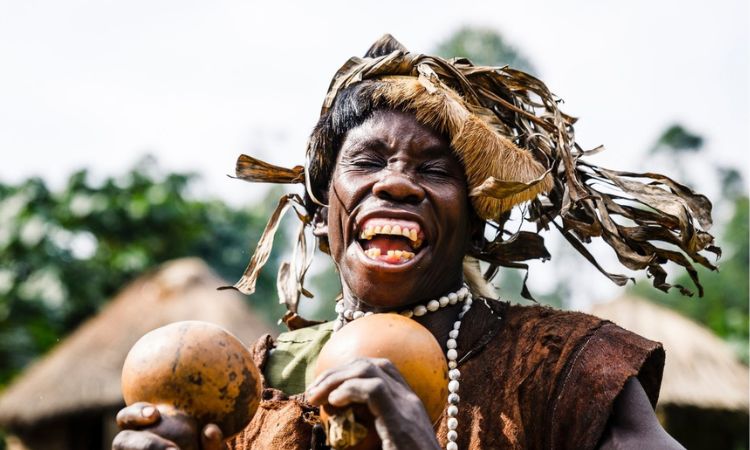
The cultural encounter contextualises the conservation story and contributes directly to Batwa community income.
Adding a Batwa trail experience to any Bwindi itinerary of three days or more is strongly recommended.
Cycling/Biking Safaris
Biking tour in Bwindi Impenetrable forest National Park is an exciting experience you need not to miss out. Mountain bike ride ventures at this park are run by women’s group and embarking on biking tour here rewards with amazing experience.
Bwindi Impenetrable National Park Weather


3 Days Bwindi Gorilla Safari is a short Uganda gorilla trekking tour designed for tourists on African Safaris for few days but wants to trek mountain gorillas in Bwindi Impenetrable National Park and Visit Batwa communities…

Experience the thrill of Mountain Gorilla encounter when your book our 2 Days Uganda Gorilla Trekking Tour Package that starts and ends in Kigali city of Rwanda for international travelers and Kisoro or Kabale for travelers…
This 7 Days Uganda Safari explores you to the western part of the country to sight various wildlife species and beautiful sceneries as well as sighting magnificent landscapes along the way. Our safari also takes you to…