Is it better to see the gorillas in Rwanda or Uganda: Complete 2026 Comparison
Is it better to see the gorillas in Rwanda or Uganda? It is the most debated question in East African safari planning and in 2026, the answer depends entirely on who is asking. Both countries protect endangered mountain gorillas.
Both offer extraordinary, once-in-a-lifetime encounters with the world’s most compelling primate. But the two experiences are genuinely different in cost, terrain, accessibility, duration, and overall safari style. This complete 2026 guide settles the Rwanda vs Uganda gorilla debate with every fact you need to make the right choice.
Permit Cost — The Biggest Difference Between Rwanda and Uganda Gorilla Trekking
The gorilla trekking permit price is the single most important factor in this comparison, and the gap is substantial.
In 2026, a gorilla trekking permit in Uganda costs $800 per person — a confirmed, government-set rate introduced by the Uganda Wildlife Authority in 2026, not a promotional deal.
Rwanda’s gorilla permit in Volcanoes National Park costs a flat $1,500 per person per trek, issued by the Rwanda Development Board.
Rwanda’s permit is nearly double the cost of Uganda’s. For the price of one Rwanda gorilla trek, you could book two Uganda permits and still have $200 left over.
For many travellers, that $700 per-person saving is transformative — it funds an additional 3-day safari to Queen Elizabeth National Park or a chimpanzee trek in Kibale Forest, turning a single-experience trip into a complete Uganda wildlife safari.
Rwanda charges $1,500 per permit for a single one-hour gorilla encounter — nearly double Uganda’s rate for the same core experience.
For the price of one Rwanda trek, you could book two Uganda permits and that’s an extraordinary calculation for budget-conscious travellers to sit with.
The permit fee in both countries includes ranger guidance, security, and one hour with a habituated gorilla family once located. Neither includes accommodation or transport.
Both countries strictly limit daily permits to protect the gorillas — book months in advance for peak season regardless of which country you choose.
The Gorilla Experience Itself — Is There a Difference?
Here is what matters most: the gorilla encounter in Rwanda and Uganda is essentially identical in quality. Uganda delivers equal conservation standards, professional ranger guidance, and structured group allocation. What differs is terrain character, lodge range, and travel logistics — not the authenticity or emotional impact of the gorilla encounter.
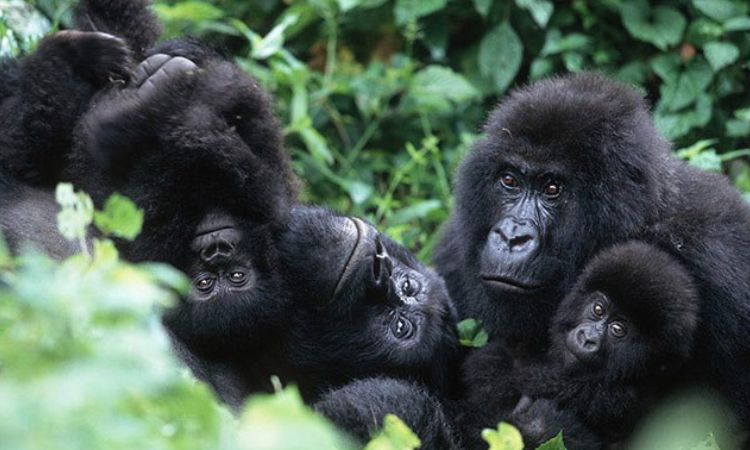
In both countries, you spend one hour with a habituated gorilla family — watching a silverback gorilla settle into the undergrowth, a mother nurse her newborn, juvenile gorillas wrestling and tumbling without a care for your presence. It is one of Africa’s most moving wildlife experiences, and it is the same species, the same intensity, and the same conservation standards in both countries.
Uganda’s exclusive advantage: Uganda offers something Rwanda does not — the Gorilla Habituation Experience in Bwindi Impenetrable National Park, allowing up to four hours with a gorilla family under research supervision. This permit costs $1,500 — equal to Rwanda’s standard trek permit — but delivers four times the time with the gorillas.
For photographers, researchers, and travellers who want maximum immersion, the Gorilla Habituation Experience in Uganda is unmatched anywhere on earth.
Rwanda’s arrival advantage: In Rwanda, the ceremony at park headquarters begins with traditional Intore dancers and locally grown coffee before the trek — a more polished, curated experience from the moment you arrive. Rwanda positions gorilla trekking as a premium conservation experience and delivers on that positioning with world-class lodges, immaculate park management, and exceptional service infrastructure.
Terrain and Trekking Difficulty
Rwanda and Uganda have genuinely different physical landscapes, and your fitness level should factor into this decision.
Volcanoes National Park, Rwanda sits in the Virunga Mountains — a chain of ancient volcanoes with dramatic, open ridgelines and slopes. Many gorilla families in Rwanda are located at lower altitudes than Bwindi, making some Rwanda treks physically shorter. Early morning treks in Volcanoes often have shorter walking times compared to Bwindi, making Rwanda ideal for travellers who want gorilla trekking without long, strenuous hikes.
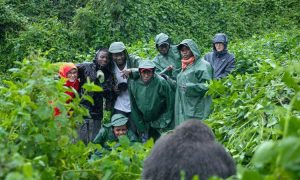
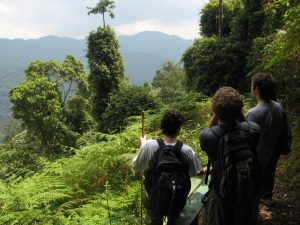
Bwindi Impenetrable National Park, Uganda earns its name. The terrain is dense equatorial rainforest with steep, slippery trails through thick undergrowth. Treks in Bwindi can range from 45 minutes to a full day depending on where a gorilla family has moved. This is genuinely challenging hiking — mud, altitude, and dense vegetation are standard. But the jungle atmosphere of Bwindi creates a primeval, immersive feeling that Volcanoes National Park’s more open landscape does not fully replicate.
Uganda also has Mgahinga Gorilla National Park — a smaller park in the Virunga range that shares its volcanic landscape character with Rwanda’s Volcanoes park, offering an alternative Ugandan gorilla experience with slightly shorter trekking times.

Accessibility and Travel Time
Rwanda wins decisively on convenience. You can fly into Kigali International Airport and be at your lodge in Musanze (gateway to Volcanoes National Park) within 2.5–3 hours on excellent paved roads. You can land, trek, and fly out in just 48 hours. Rwanda’s infrastructure is exceptional, roads are smooth, transfers are efficient, and the entire logistical experience is polished.
Uganda requires more time. Driving from Entebbe International Airport to Bwindi Impenetrable National Park takes 9–10 hours, a full day’s journey on a mix of tarmac and dirt roads, requiring at least one overnight stop in Kampala, Mbarara, or Kabale. This makes Uganda gorilla trekking unsuitable for short breaks of fewer than four days.
The 2026 smart traveller’s shortcut: Many travellers now fly into Kigali and drive four hours across the border to Bwindi, a route that allows you to enjoy Uganda’s $800 permit while using Rwanda’s efficient airport. This hybrid approach has become increasingly popular and reduces Uganda’s biggest practical disadvantage considerably.
Cost of a Full Gorilla Safari — Rwanda vs Uganda
The permit is just the starting point. A 5-day gorilla trekking safari typically ranges between $2,400–$4,500 per person in Uganda (mid-range to luxury), including permits, accommodation, meals, and transport. In Rwanda, expect to spend $3,500–$7,000+ per person for an equivalent 5-day experience, reflecting higher lodge pricing and Rwanda’s premium-positioned tourism economy.
Rwanda gorilla trekking is best suited for travellers seeking comfort, efficiency, exclusivity, and a high-end conservation-driven safari experience.
Uganda is the more popular option for travellers seeking an affordable gorilla safari — the most popular destination for trekkers who value depth of experience over polish of infrastructure.
Conservation — Your Permit Fee Makes a Real Difference
Regardless of which country you choose, your permit fee directly funds mountain gorilla conservation. Mountain gorillas were reclassified from Critically Endangered to Endangered in 2018 — a rare conservation victory driven largely by permit-funded programmes.
According to a 2026 IUCN report, the mountain gorilla population has steadily increased by 5% annually due to these efforts. When you book your trek, you are not just witnessing something remarkable — you are actively sustaining it.
The current global mountain gorilla population stands at approximately 1,063–1,080 individuals — a species that was predicted to be extinct by the 1990s. Gorilla trekking tourism is the primary reason that prediction proved wrong.
Rwanda vs Uganda Gorilla Trekking — Which Should YOU Choose?
Choose Uganda gorilla trekking if:
- Budget is a primary consideration — $800 vs $1,500 per permit is a meaningful gap
- You want more time with the gorillas — the Gorilla Habituation Experience (4 hours, $1,500) is Uganda-exclusive
- You want to combine gorillas with chimps (Kibale), tree-climbing lions (Queen Elizabeth), or the Nile (Jinja) in one trip
- You prefer a rugged, adventurous forest experience over a curated luxury one
- You can spare at least 5–7 days for the trip
Choose Rwanda gorilla trekking if:
- Time is limited — you can complete the full experience in 2–3 days from Kigali
- Comfort and luxury infrastructure matter more than saving on permit cost
- You prefer shorter, less physically demanding treks
- You want to combine gorillas with Rwanda’s extraordinary genocide memorial history and Kigali city culture
- The premium experience — Intore dancers at park headquarters, world-class Virunga lodges, and Rwanda’s pristine conservation reputation — justifies the additional cost
The experienced traveller’s pro tip: Do Uganda first, Rwanda later — start with the adventurous, value-rich Bwindi experience, then upgrade to Rwanda’s refined version on a subsequent trip. Both deserve a place on your lifetime gorilla trekking list. The question is which one comes first for you.
Both Rwanda and Uganda protect the same endangered species in extraordinary landscapes with world-class ranger teams.
Neither choice is wrong. The right choice depends entirely on your budget, fitness, time, and the style of experience you want. Now you have every fact you need to decide.