
Where Is Rwanda? Location, Map, Borders & Top Facts
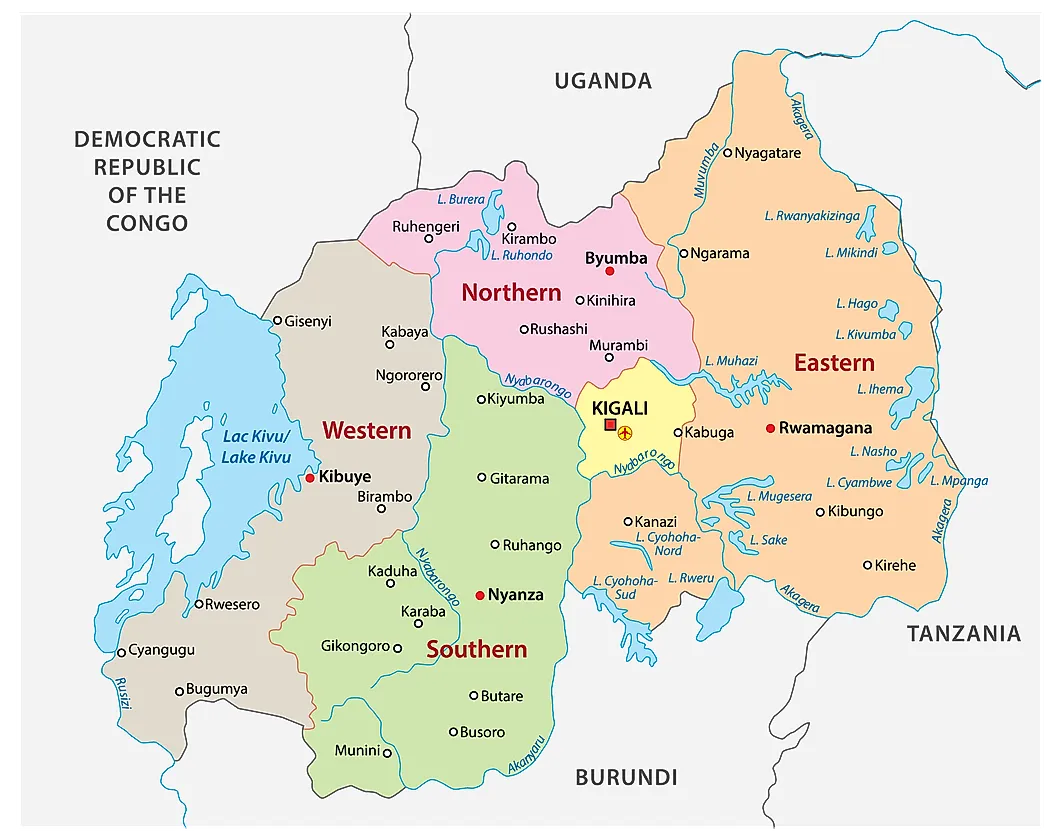
Where Is Rwanda: Rwanda is a landlocked country located in East-Central Africa, bordered by Uganda to the north, Tanzania to the east, Burundi to the south, and the Democratic Republic of the Congo (DRC) to the west.
This small but vibrant nation sits just south of the equator in the African Great Lakes region. Often called the “Land of a Thousand Hills,” Rwanda offers stunning mountainous landscapes, rich biodiversity, and a growing reputation as a top ecotourism destination.
Rwanda on the Map
Rwanda lies in the eastern-central part of the African continent, within the Great Rift Valley. It is positioned a few degrees south of the equator, between approximately 1° and 3° S latitude and 29° to 31° E longitude. Its location places it firmly in the East Africa region, though some classifications also refer to it as part of East-Central or Central Africa due to its position among the Great Lakes countries.
The country is compact, covering just 26,338 square kilometers (about the size of the U.S. state of Maryland). It is surrounded by larger neighbors and features high plateaus, volcanic mountains in the north, and Lake Kivu along its western border.
Countries That Border Rwanda
Rwanda shares land borders with four countries:
- Uganda to the north (approximately 172 km)
- Tanzania to the east (approximately 222 km)
- Burundi to the south (approximately 315 km)
- Democratic Republic of the Congo to the west (approximately 221 km), with Lake Kivu forming a natural boundary in parts.
These borders make Rwanda a key hub in the Great Lakes region, with relatively easy overland access from neighboring capitals.
Capital City of Rwanda
The capital and largest city is Kigali, located in the geographic center of the country at an elevation of about 1,567 meters above sea level. Kigali is a modern, clean, and rapidly developing city known for its orderly streets, vibrant markets, and mix of traditional and contemporary architecture. It serves as the economic, political, and cultural heart of Rwanda and is the main entry point for most international visitors.
Kigali International Airport (KGL) handles the majority of flights and connects Rwanda to major African and international hubs.
Region & Geography
Rwanda is part of East Africa and belongs to the East African Community (EAC). Its nickname, “Land of a Thousand Hills” (or Pays des Mille Collines in French), comes from its rolling, mountainous terrain that dominates much of the landscape. The country features high plateaus, deep valleys, and the Virunga volcanic mountains in the northwest, which rise to over 4,500 meters in some areas.
The terrain is highly varied for such a small country: lush green hills covered in terraced farmlands, dense forests, and scenic lakes.
Lake Kivu, one of Africa’s Great Lakes, forms a dramatic western boundary with the DRC. This geography contributes to Rwanda’s high population density and its focus on sustainable agriculture and tourism.
How to Get to Rwanda
Most visitors arrive by air at Kigali International Airport (KGL). RwandAir, the national carrier, offers direct or convenient connecting flights from various African cities and some European hubs.
Popular routes include connections via Nairobi (Kenya), Entebbe (Uganda), Addis Ababa (Ethiopia), and Johannesburg (South Africa). International airlines such as Kenya Airways, Ethiopian Airlines, and Turkish Airlines also serve Kigali.
Travelers from neighboring countries can enter by road or bus. Well-maintained roads connect Kigali to Kampala (Uganda), Bujumbura (Burundi), and other border points. Overland travel is straightforward for those combining Rwanda with Uganda or Tanzania safaris, though border formalities apply.
Domestic travel is easy, with good roads leading to major attractions like Volcanoes National Park (about 2–3 hours north of Kigali).
Climate & Location Features
Rwanda has a tropical highland climate moderated by its altitude. Temperatures are mild year-round, typically ranging from 16°C to 22°C (61°F to 72°F) in many areas, with cooler nights in higher elevations.
The equator’s proximity brings two rainy seasons (March–May and October–November) and two drier periods (June–September and December–February).
The high altitude prevents extreme tropical heat, making the climate pleasant for outdoor activities like hiking and gorilla trekking. The Virunga region can be cooler and wetter, with mist often enveloping the volcanoes.
Why Rwanda Is Famous
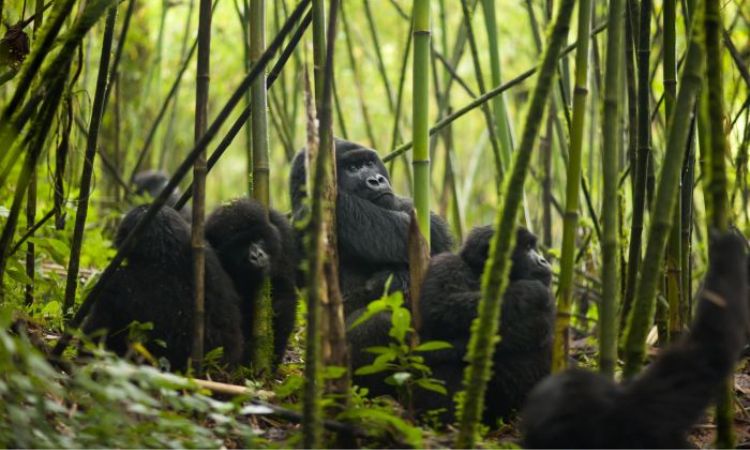
Rwanda is world-renowned for mountain gorilla trekking in Volcanoes National Park. This park protects several habituated gorilla families in the Virunga Mountains, offering visitors an unforgettable opportunity to observe these endangered primates up close (permits currently cost $1,500 per person for one hour with the gorillas). The experience supports conservation and local communities while providing a profound wildlife encounter.
Beyond gorillas, Rwanda boasts other national parks, including Akagera national park and Nyungwe forest national park. The country is also known for its post-1994 recovery, emphasis on cleanliness, community-based tourism, and progressive development.
For those planning a trip, consider combining your visit with Rwanda safaris or specialized gorilla trekking tours for a seamless experience.
Quick Facts About Rwanda
- Capital: Kigali
- Population (2026 estimate): Approximately 14.9 million
- Official Languages: Kinyarwanda (national language), English, French, and Swahili
- Currency: Rwandan Franc (RWF)
- Area: 26,338 km²
- Time Zone: UTC +2 (Central Africa Time)
- Government: Presidential republic
- Density: One of the most densely populated countries in Africa
These facts highlight Rwanda’s compact size and youthful, growing population.
Distance From Major Cities
- From Nairobi (Kenya): About 798 km by air (roughly 1.5–2 hours flight); road distance via Kampala is longer, around 1,100–1,200 km.
- From Kampala (Uganda): Approximately 495–530 km by road (about 7–10 hours drive, depending on border crossing and traffic).
These relatively short distances make Rwanda easy to combine with East African itineraries.
FAQs about Rwanda
Is Rwanda in East or Central Africa?
Rwanda is generally classified as part of East Africa and is a member of the East African Community. However, due to its location in the Great Lakes region, it is sometimes described as East-Central Africa.
Is Rwanda a safe country?
Yes, Rwanda is widely regarded as one of the safest countries in Africa for tourists. Crime rates are low in tourist areas and Kigali, with strong law enforcement and community initiatives promoting security. Standard precautions apply, and visitors should avoid border areas with ongoing regional tensions (such as parts near the DRC). Always check current travel advisories.
What is Rwanda known for?
Rwanda is famous for its mountain gorillas and gorilla trekking in Volcanoes National Park, its dramatic “thousand hills” landscapes, rapid post-genocide development, cleanliness, and commitment to conservation and sustainable tourism.
How big is Rwanda?
Rwanda covers 26,338 square kilometers, making it one of Africa’s smallest countries by area but one of the most densely populated.
Rwanda continues to evolve as a premier destination for responsible travel. Its combination of natural wonders, cultural richness, and modern infrastructure makes it a standout in East Africa.
Whether you’re drawn to primate encounters, scenic hikes, or exploring vibrant Kigali, the country offers memorable experiences in a compact and welcoming package.
For tailored adventures, explore Rwanda safaris or book your gorilla trekking tours in advance, as permits are limited and popular.