
What Do Wildebeest Eat? A Complete Guide to Wildebeest Diet
What Do Wildebeest Eat: Discover what wildebeest eat, their preferred short grasses, seasonal feeding habits, and how the Serengeti wildebeest migration follows rainfall.
Learn about wildebeest diet, water needs, competition with zebras, and best places to see them grazing in Serengeti National Park and Masai Mara.
Wildebeests, also known as gnus, are iconic herbivores in Africa and a cornerstone of the savanna ecosystem. These large antelopes, with their distinctive curved horns and bearded faces, are best known for the massive Serengeti wildebeest migration, one of the greatest wildlife spectacles on Earth.
Understanding the wildebeest diet is essential because their feeding directly drives one of the planet’s most impressive animal movements, supports predator populations, and maintains grassland health.
There are two main wildebeest species: the blue wildebeest (Connochaetes taurinus), famous for the East African migrations, and the black wildebeest (Connochaetes gnou), found primarily in southern Africa.
Both are strict herbivores in Africa that play a vital role in nutrient cycling. Their constant grazing prevents bush encroachment, reduces wildfire risk, and enriches soil.
Do wildebeests eat grass? Absolutely — it forms the bulk of their diet. They primarily consume short grasses, fresh green shoots, and herbs. Wildebeests do not eat meat; they are dedicated grazers with wide muzzles and specialized teeth for cropping dense, low vegetation efficiently.
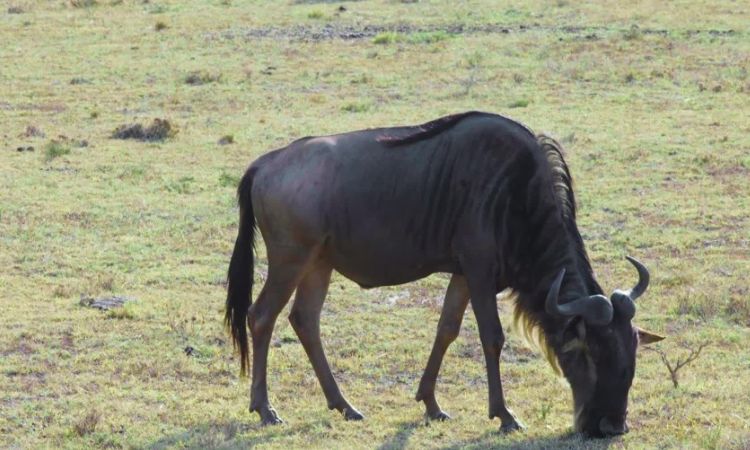
What Do Wildebeest Eat: Main Components of the Wildebeest Diet
Wildebeests prefer short, fresh, nutrient-rich grasses that grow quickly after rains or fires. They target sweet, stocky varieties on plains and savannas, often selecting areas with high phosphorus and nitrogen content, especially important for lactating females.
When fresh grass is scarce, they supplement with herbs, shrubs, tree leaves, and succulent plants. Blue wildebeests focus more on short grasses in open savannas and woodlands, while black wildebeests, in more open grasslands, have similar habits but may consume slightly more shrubs (up to 37% in some cases) during dry periods. Grasses still make up over 90% of the diet for both.
Seasonal Feeding Habits and Rainfall Relationship
Wildebeest feeding habits are tightly linked to rainfall. In the wet season, abundant fresh grasses support rapid weight gain and calving. In the dry season, they shift to areas with remaining green vegetation or browse more on shrubs.
Rainfall dictates grass growth, mineral content, and water availability. Wildebeests follow rainfall gradients, moving to phosphorus-rich short-grass plains during the wet season for optimal nutrition.
How Migration Affects Wildebeest Feeding
The Serengeti wildebeest migration and wildebeest migration and food are inseparable. Over 1.5 million blue wildebeests, along with zebras and gazelles, travel up to 1,600 km annually in a clockwise loop between Tanzania’s Serengeti National Park and Kenya’s Masai Mara National Reserve.
- Wet season (November–April): Southern Serengeti short-grass plains offer nutritious grazing and safer calving grounds.
- Dry season (May–October): Herds move north and west to taller grasses and permanent water sources.
Zebras often lead, eating taller, coarser grasses and exposing shorter, fresher shoots that wildebeests prefer. Thomson’s gazelles follow, nibbling the closest herbs. This succession optimizes resource use.
Wildebeest Feeding Behavior in the Serengeti
In Serengeti National Park, wildebeests graze from dawn, rest midday, and feed until dusk. They are bulk feeders and ruminants with four-chambered stomachs that allow them to extract maximum nutrition from tough grasses by re-chewing cud. Herds move almost constantly in search of fresh patches.
Baby Wildebeests and Their Diet
Wildebeest calves are highly precocial — they can stand and run within minutes of birth. They begin nibbling grass very young but rely primarily on mother’s milk for the first few months. This rapid development helps them keep up with the migrating herds during the Serengeti wildebeest migration.
Daily Food Consumption and Water Needs
A single wildebeest consumes significant grass daily. Collectively, the Serengeti herds eat over 4,500 US tons (about 4,100 metric tons) of grass per day. Individual intake varies with size, season, and activity, but their role as “lawn mowers” is immense.
What do wildebeests drink? They need water almost daily, preferably drinking twice a day when possible. This dependence drives migration routes toward rivers and waterholes, especially in the dry season.
Where Wildebeests Find Food in Africa
Blue wildebeests thrive in East and Southern African savannas, with the largest populations in the Serengeti-Mara ecosystem. Black wildebeests prefer open Highveld grasslands in South Africa. Key spots include Serengeti National Park (Tanzania) and Masai Mara National Reserve (Kenya).
Competition with Other Herbivores
Wildebeests compete and cooperate with zebras and gazelles. Zebras handle taller grasses; wildebeests take the shorter regrowth; gazelles select the finest bits. This reduces direct competition while improving overall grazing efficiency.
Predators and Feeding Risks
Grazing in open areas exposes wildebeests to lions, hyenas, cheetahs, wild dogs, and crocodiles at river crossings. Their sheer numbers provide safety in numbers, but the migration remains a high-stakes journey.
Role in the Ecosystem
As key herbivores in Africa, wildebeests maintain grassland balance, reduce wildfire fuel loads, aerate soil with hooves, and deposit nutrient-rich dung. Their carcasses from river crossings even fertilize aquatic ecosystems.
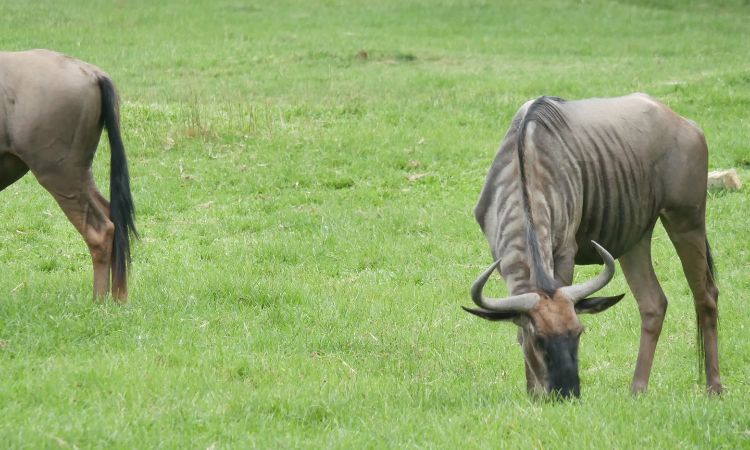
Climate Change Impacts on Wildebeest Food Sources
Climate change disrupts rainfall patterns, causing more frequent droughts, erratic wet seasons, and shifts in grass growth. This can desynchronize migration timing with food availability, reduce calf survival, and lower population numbers. Prolonged dry periods also increase competition for scarce resources.
Best Places to See Wildebeests Grazing
- Serengeti National Park, Tanzania: Prime for calving and southern plains grazing.
- Masai Mara National Reserve, Kenya: Dramatic river crossings and northern grazing. Other areas in South Africa and Namibia offer black wildebeest sightings.
FAQs About What Do Wildebeest Eat
What do wildebeest eat?
Primarily short grasses, fresh shoots, herbs, and occasionally shrubs or leaves.
Do wildebeests eat meat?
No, they are pure herbivores.
What do wildebeests drink?
Water almost daily, often twice when available.
How does migration affect their food?
It allows them to track fresh, nutritious grasses year-round following rainfall.
Conclusion
The wildebeest diet of short grasses and fresh vegetation, combined with their wildebeest grazing habits, powers one of nature’s most awe-inspiring events — the Serengeti wildebeest migration.
These resilient herbivores exemplify the delicate balance of African savannas, where food, water, and movement sustain millions of animals and enrich entire ecosystems.
Witnessing vast herds grazing on the golden plains or thundering across rivers is an unforgettable experience that highlights why conservation matters. For the ultimate adventure, join us at Gorilla Trackers for expertly guided Kenya safaris in Masai Mara or Tanzania’s Serengeti.
Our experienced teams will bring you closer to these incredible animals while supporting responsible wildlife tourism. Contact us today to plan your dream safari and see wildebeests in action!