
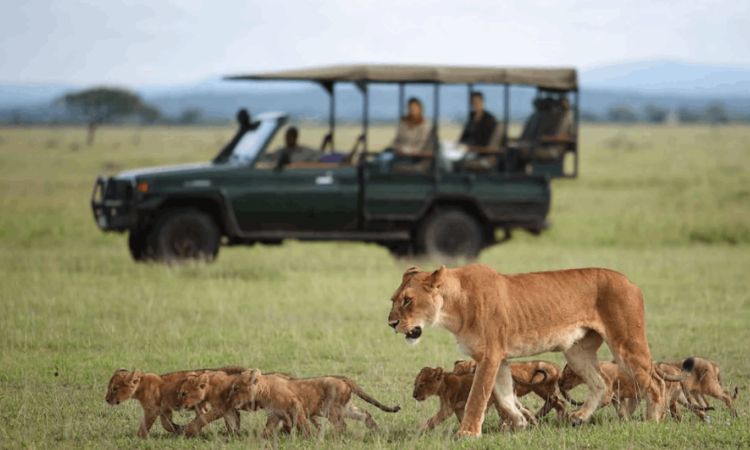
Uganda Safari vs Tanzania Safari: Which One Should You Choose?
Compare Uganda Safari vs Tanzania Safari to discover wildlife, gorilla trekking, the Great Migration, costs, and the best destination for your African adventure.
Choosing between a Uganda safari and a Tanzania safari usually comes down to one core question: are you chasing mountain gorillas in misty rainforest, or the sheer scale of the Serengeti’s wildebeest migration?
Both countries deliver genuinely world-class African wildlife experiences, but they’re built around fundamentally different centerpieces, different costs, and different pacing.
This guide breaks down exactly how a Uganda gorilla safari compares to a Tanzania wildlife safari, so you can decide which fits your trip — or whether you should do both.
Uganda Safari: What You Actually Get
A Uganda safari is built primarily around primates, and mountain gorilla trekking specifically. Bwindi Impenetrable National Park is home to roughly half the world’s remaining mountain gorilla population, and a single trek gets you a genuine hour face-to-face with a habituated gorilla family — an experience with no real equivalent anywhere else in Tanzania.
Beyond gorillas, Uganda delivers real Big Five game viewing across four national park, Murchison Falls N.P, Queen Elizabeth N.P, Kidepo Valley, and Lake Mburo n.p plus chimpanzee tracking in Kibale Forest, tree-climbing lions in Queen Elizabeth’s Ishasha sector, and a boat cruise along the Victoria Nile to the base of Murchison Falls itself.
Uganda’s compact geography also means a 7 days Uganda wildlife safari can realistically combine gorillas, chimps, and savanna game drives in one manageable loop, without the long overland distances Tanzania often requires.
Tanzania Safari: What You Actually Get
A Tanzania safari is built around sheer scale and the single greatest wildlife spectacle on the continent, the wildebeest migration, when over a million wildebeest and zebra move in a continuous cycle across the Serengeti and into Kenya’s Maasai Mara.
Tanzania’s Ngorongoro Crater adds one of Africa’s densest concentrations of Big Five wildlife within a single, spectacular volcanic caldera. Unlike Uganda, Tanzania offers a genuinely easy beach extension via Zanzibar, letting a 10 days best of Tanzania safari package combine savanna wildlife with a relaxing coastal finish something Uganda’s landlocked geography simply can’t replicate.
Cost Comparison: Uganda vs Tanzania Safari Prices
This is where the two countries diverge most sharply. A Uganda gorilla trekking permit currently runs USD 800 per person for a single one-hour trek — a significant but one-time cost that anchors most Uganda itineraries.
Tanzania has no equivalent single “headline fee,” but its national park entrance fees, conservancy fees around Ngorongoro, and the premium lodges common across the northern circuit tend to push overall trip costs higher on a like-for-like comparison, particularly for travelers wanting to see the migration at its peak.
Budget-focused travelers often find a Uganda safari including a gorilla trek, comes out cheaper overall than an equivalent-length Tanzania itinerary once accommodation and park fees are factored in, though both countries offer genuinely budget-friendly options at the lower end.
Best Time to Visit: Uganda vs Tanzania
Uganda can genuinely be visited year-round, though the dry seasons ranging from June to September and December to February, are considered high season, offering easier trekking conditions and firmer roads; the wetter months of March, April, May, October, and November bring muddier trails and some partial lodge closures.
Tanzania’s timing is more tightly tied to the migration itself — the Serengeti’s wildebeest herds move through different regions depending on the month, with the Southern Serengeti best for calving season (roughly January to March) and the Northern Serengeti and Mara River crossings peaking around July to October. Choosing when to travel to Tanzania often means choosing which stage of the migration you want to witness.

Wildlife Comparison: Gorillas vs. the Great Migration
Neither experience genuinely substitutes for the other. Gorilla trekking in Uganda is an intimate, hour-long encounter with a small family group in dense forest — quiet, personal, and physically demanding to reach.
The wildebeest migration in Tanzania is the opposite kind of spectacle entirely — vast herds moving across open plains, often visible in genuinely staggering numbers from a single vantage point.
Travelers drawn to primates, forest trekking, and a more intimate wildlife encounter tend to gravitate toward Uganda; travelers wanting the classic, wide-open savanna image of Africa — endless plains, dramatic predator-prey action, enormous herds — tend to gravitate toward Tanzania.
Which Is Better for First-Time Safari-Goers?
For a first African safari, Tanzania’s northern circuit (Serengeti, Ngorongoro, and often Tarangire) offers a more classically “safari” experience with dense, easily viewed wildlife across open terrain, making it genuinely easier for beginners to see a huge volume of animals in a short time.
Uganda suits travelers specifically drawn to primates and willing to trade some savanna density for a deeper, more unique gorilla or chimpanzee encounter, plus generally lower overall costs.
Neither is objectively “better” — the right choice depends entirely on what kind of wildlife encounter you’re actually chasing.
Can You Combine Uganda and Tanzania in One Trip?
Yes, though it requires more flights and logistics than staying within one country — Uganda and Tanzania don’t share a land border, so combining both typically means flying via Nairobi or Kigali rather than a direct overland route.
Many travelers instead pair Uganda with Rwanda (which does share a border and gorilla-trekking infrastructure) for a single combined trip, saving the Tanzania leg for a separate journey focused specifically on the migration.
Our 12 Day Uganda Budget Tour and Long Uganda Safaris guide cover exactly this kind of extended, in-depth Uganda itinerary if you’d rather go deep on one country than split time across two.
Uganda Safari Packages to Consider
If Uganda’s gorilla trekking and primate focus appeals more, our 6 Days Uganda Safari to Kibale, Queen Elizabeth & Bwindi combines all three of Uganda’s headline experiences including chimpanzee tracking, tree-climbing lions, and gorilla trekking — in one well-paced week.
Budget-conscious travelers should look at our 3 Days Gorilla Trekking Safari, the most affordable way to experience Bwindi’s mountain gorillas, while our 5 Days Gorilla Trekking Uganda Safari adds golden monkey trekking and a Batwa cultural encounter in Mgahinga Gorilla National Park.
Tanzania Safari Packages to Consider
For travelers leaning toward Tanzania’s migration and Big Five scale, our full guide on things to do in Ngorongoro Crater covers exactly what makes this volcanic caldera one of Africa’s most concentrated wildlife-viewing destinations, a natural centerpiece for any Tanzania itinerary.
Still deciding between the two? Get a free quote from Afrik-Trek Holidays, and we’ll help you choose — or combine — the right itinerary for your travel style and budget.
Our commitment to sustainable tourism means every itinerary, whether in Uganda or Tanzania, incorporates community-based experiences and eco-friendly accommodation as standard.

FAQ: Uganda Safari vs Tanzania Safari
Is a Uganda safari cheaper than a Tanzania safari? Generally yes, once gorilla trekking is included — Uganda’s overall trip costs, including accommodation and park fees, often come in lower than an equivalent-length Tanzania itinerary, particularly during migration peak season.
Can I see the wildebeest migration in Uganda? No — the migration is unique to the Serengeti-Mara ecosystem spanning Tanzania and Kenya. Uganda’s wildlife highlight is mountain gorilla trekking, which has no equivalent in Tanzania.
Which country has better Big Five viewing, Uganda or Tanzania? Tanzania’s Ngorongoro Crater and Serengeti generally offer denser, easier Big Five viewing across open terrain, while Uganda’s Big Five parks (Murchison Falls, Queen Elizabeth, Kidepo Valley, Lake Mburo) offer a more varied, primate-inclusive experience.
What is the best time to visit Uganda for a safari? June to September and December to February, Uganda’s dry seasons, offer the easiest trekking conditions and most reliable wildlife viewing.
Can I combine a Uganda gorilla trek with a Tanzania safari in one trip? Yes, though it requires flying via a hub like Nairobi or Kigali since the two countries don’t share a land border — many travelers instead pair Uganda with neighboring Rwanda for a single combined itinerary.
Related Safari Guides
- The Ultimate 6 Days Uganda Safari to Kibale, Queen Elizabeth & Bwindi
- 3 Days Gorilla Trekking Safari Package
- 5 Days Gorilla Trekking Uganda Safari
- 12 Day Uganda Budget Tour
- Long Uganda Safaris: Top 10 Best Long Safaris to Uganda
- 7 Fun Things to Do in Ngorongoro Crater
- Sustainable Tourism and Eco Tourism Safaris
- Book Uganda Gorilla Safaris, Rwanda Tours & Tanzania Safaris


