
Striped Hyena Top Facts: Size, Weight, Baby, Sound, & more
The striped hyena (Hyaena hyaena) is a nocturnal scavenger found across Africa, the Middle East, and parts of Asia. Known for its shaggy coat anstriped hyena vs spotted hyenad eerie calls, the striped hyena plays a vital role in the ecosystem as nature’s cleanup crew, helping recycle nutrients and reduce disease spread by consuming carcasses.
This often-misunderstood member of the Hyaenidae family stands out with its distinctive black stripes, erectable mane, and solitary lifestyle.
Unlike the more famous spotted hyena, the striped hyena tends to avoid conflict and thrives in harsh, arid environments where other large carnivores struggle.
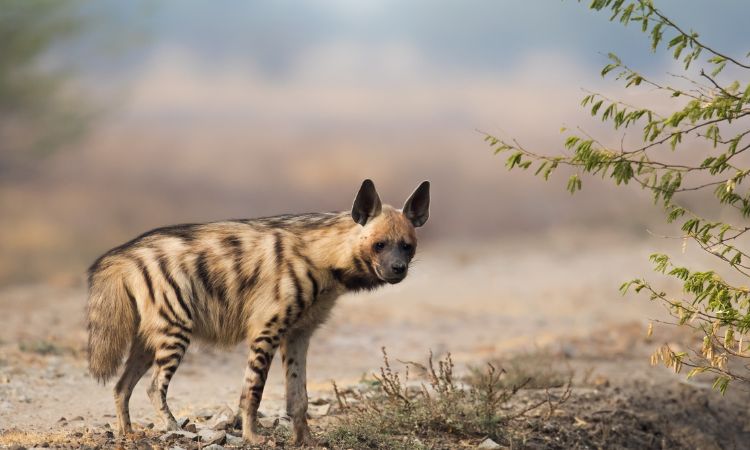
Striped Hyena Physical Characteristics
The striped hyena has a dog-like appearance with unique features that aid survival in open, arid landscapes. Adults stand about 60–80 cm (24–31 inches) at the shoulder, with a head-body length of 85–130 cm (33–51 inches) and a tail of 25–40 cm (10–16 inches).
Striped hyena Weight typically ranges from 22–55 kg (49–121 lb), averaging around 35 kg (77 lb), with males often slightly heavier than females.
Key traits include:
- Striped fur: A grayish or brownish base coat with prominent black vertical stripes on the body, legs, and head for camouflage in tall grass or rocky terrain.
- Erectable mane: A long, shaggy mane of hair running from the neck to the tail that can be raised to make the animal appear up to 38% larger when threatened.
- Sloped back: Longer front legs than hind legs create a distinctive sloping profile and energy-efficient loping gait for long-distance travel.
- Large pointed ears: Excellent for hearing in the dark.
- Strong jaws and muzzle: Powerful enough to crush bones.
Their winter coat is especially long and luxurious. When alarmed, they can evert anal glands to spray a pungent liquid as a defense.
Striped Hyena Diet & Feeding Habits
What do striped hyenas eat? They are primarily scavengers, relying on carrion (dead animal remains) for the bulk of their diet. They consume carcasses, bones, cartilage, and even decaying meat left by larger predators like lions or leopards.
Their powerful jaws and specialized digestive system allow them to process bones efficiently, extracting calcium and nutrients that few other animals can access.
They are opportunistic omnivores and also eat:
- Fruits, seeds, and leaves (especially in lean times)
- Insects, small vertebrates, and occasionally human refuse near settlements
- Live prey when available, such as small mammals, birds, or weakened ungulates, though hunting is secondary to scavenging
Striped hyenas need more water than many desert animals due to their scavenging lifestyle. Their acute sense of smell helps locate food from great distances at night.
Behavior & Lifestyle
Striped hyenas are mostly nocturnal, emerging at dusk and returning to dens before dawn to avoid daytime heat and larger competitors. They are generally solitary or live in small family units (often monogamous pairs with offspring), unlike the highly social spotted hyena clans.
They mark territories using anal gland secretions, urine, and latrines. When threatened, they raise their mane, evert the rectum, and spray foul-smelling fluid.
They are shy and submissive toward larger predators like spotted hyenas or lions, often yielding food without fight. Vocalizations include whoops, growls, and eerie laughs or calls that carry across the night landscape.
Reproduction & Lifespan of the Striped Hyena
Striped hyenas breed year-round, often forming monogamous pairs. After a gestation period of 90–91 days, the female gives birth to 1–5 cubs (usually 2–4) in a secluded den, cave, or rocky crevice.
Striped hyena babies (cubs) are born with adult-like black stripes, closed eyes, and small ears. Their eyes open after 7–8 days. They leave the den at about one month, start eating solid food, and are weaned around 2 months.
Both parents help feed and raise the cubs. By autumn, cubs reach half adult size. Sexual maturity occurs at 2–3 years.
Are Striped Hyenas Dangerous?
Are striped hyenas dangerous to humans? Generally no—they are shy, nocturnal, and prefer to avoid people. Most encounters result in the hyena fleeing, especially if noise or light is present. They rarely attack healthy adult humans and are far less aggressive than spotted hyenas.
Rare historical incidents of attacks on sleeping children or vulnerable individuals have occurred in areas with high overlap (e.g., parts of India or the Caucasus), often linked to food scarcity or habituation to human refuse.
They may scavenge human corpses but do not typically target living people. Respect their space, secure livestock and garbage, and they pose minimal threat.
Habitat & Distribution
Striped hyenas inhabit a vast but increasingly fragmented range across North and East Africa, the Middle East, the Caucasus, Central Asia, and the Indian subcontinent.
They are absent from southern Africa. Key regions include Ethiopia, Kenya, and Tanzania in Africa, plus countries like Iran, India, and parts of the Arabian Peninsula.
They prefer arid to semi-arid habitats such as:
- Savannas and open grasslands
- Deserts and semi-deserts
- Rocky scrublands, hillsides, and mountainous areas with cover for dens
These adaptable animals can survive in environments too dry or rugged for many predators, using caves, rocky crevices, or burrows as daytime shelters.
Their distribution is patchy today due to human pressures, with stronger populations in parts of East Africa and India, but declining or data-deficient in many areas like West Africa and the Sahara fringes.
Role in the Ecosystem
Striped hyenas are essential ecosystem engineers. By scavenging and crushing bones, they clean up carcasses, recycle nutrients back into the soil, and help prevent the spread of diseases like anthrax or rabies from rotting remains. Their opportunistic feeding supports biodiversity in harsh landscapes where they fill a unique niche.
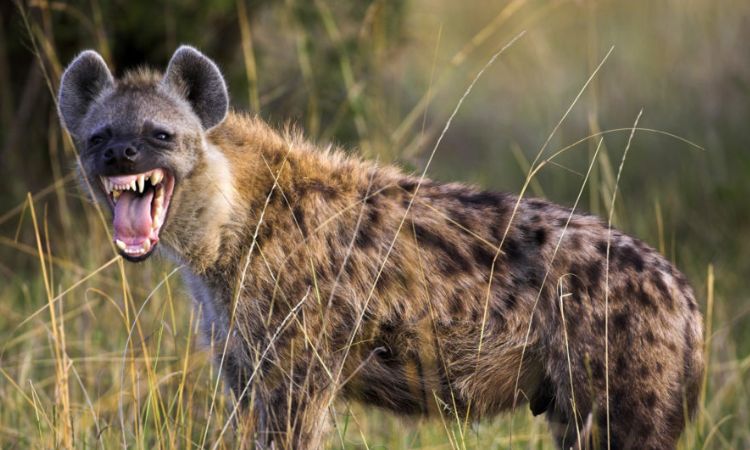
Striped Hyena vs Spotted Hyena
Many people confuse the two—here’s a clear comparison:
- Size: Spotted hyenas are larger (up to 58+ kg) with a more robust build; striped hyenas average smaller (around 35 kg).
- Appearance: Spotted have irregular spots and rounded ears; striped have vertical black stripes, pointed ears, and a prominent mane.
- Behavior: Spotted hyenas are highly social, living in large matriarchal clans (up to 80+ members) and active hunters. Striped hyenas are mostly solitary or in small family groups and primarily scavengers.
- Social Structure: Spotted females dominate; striped pairs are more egalitarian, with males helping raise cubs.
- Diet & Aggression: Spotted hunt more actively and can be bolder around humans; striped are shyer and less confrontational.
Spotted hyenas dominate where ranges overlap, often stealing food from striped hyenas.
Conservation Status
The striped hyena is listed as Near Threatened by the International Union for Conservation of Nature (IUCN), with a global population estimated under 10,000 mature individuals and continuing to decline. Threats include:
- Habitat loss and fragmentation from agriculture and development
- Human-wildlife conflict, including persecution, poisoning, and retaliatory killings over livestock
- Declining prey base and road accidents
They are on CITES Appendix III in some countries. Conservation efforts focus on reducing persecution, protecting corridors, and raising awareness, especially in fragmented Asian populations.
Where to See Striped Hyenas
Striped hyenas are elusive and best spotted on night drives in suitable habitats. In Africa, look in central Kenya in Laikipia conservancies, Meru, or Samburu National Reserve and northern Tanzania in Serengeti fringes, Tarangire National Park.
In the Middle East and Asia, protected areas in India (e.g., parts of Gujarat or Deccan) and scattered reserves offer chances, though sightings remain rare and require patience.
Private conservancies with low disturbance and experienced guides increase success rates. Always prioritize ethical wildlife viewing that supports local conservation.
Fun & Interesting Facts
- Bone crushers: Their jaws exert immense pressure, easily cracking large mammal bones for marrow.
- Super smell: An acute sense of smell locates distant carcasses at night.
- Mane magic: Raising the mane instantly makes them look much bigger to deter threats.
- Unique vocalizations: Eerie whoops and calls that sound almost ghostly in the darkness.
- Water needs: They require more water than many arid-adapted animals due to their diet.
- Monogamous tendencies: Pairs often bond and co-parent, unusual among hyenas.
FAQs- Striped Hyena
What does a striped hyena eat?
Primarily carrion and bones from carcasses, supplemented by fruits, insects, small animals, and occasionally refuse.
Where do striped hyenas live?
Arid savannas, deserts, rocky areas across North/East Africa, the Middle East, Central Asia, and India.
Are striped hyenas dangerous?
Generally not—they are shy and avoid humans. Attacks are extremely rare and usually involve vulnerable individuals in specific historical contexts.
How big is a striped hyena?
Shoulder height 60–80 cm (24–31 in), length 85–130 cm (33–51 in) plus tail, weight 22–55 kg (49–121 lb), averaging ~35 kg.
Striped hyena lifespan?
10–12 years in the wild; up to 20–25 years in captivity.