
Snake: Types, Habitat, Diet & Interesting Facts
Snake: Snakes are legless reptiles found in many parts of the world, known for their unique movements, hunting skills, and wide variety of species. These fascinating creatures have captivated humans for centuries with their sleek bodies, stealthy behavior, and remarkable adaptations.
From ancient myths to modern wildlife safaris, snakes continue to intrigue and sometimes intimidate us. This complete guide covers everything you need to know about snakes, including types of snakes, snake facts, venomous snakes, habitats, diet, behavior, and more—perfect for nature enthusiasts, safari-goers, or anyone curious about these reptiles.
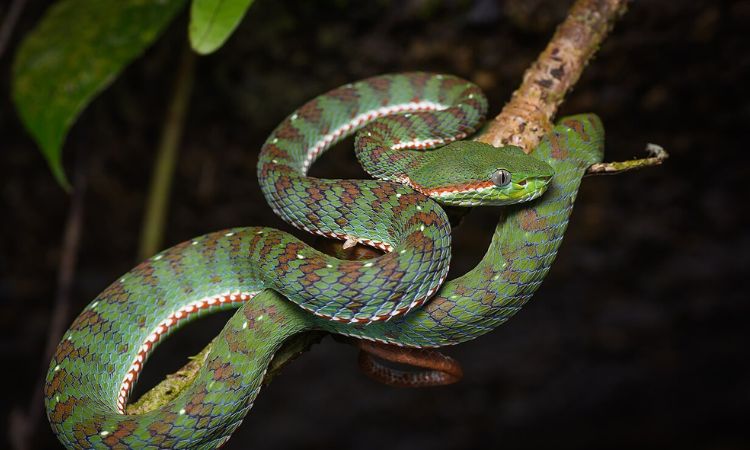
Where Snakes Live
Snakes thrive in diverse environments across every continent except Antarctica. Their adaptability allows them to occupy nearly all terrestrial and some aquatic habitats.
- Forests: Dense tropical and temperate forests provide ample cover, prey, and moisture. Arboreal species like some cobras and pythons climb trees, while others hide in leaf litter.
- Deserts: Desert snakes, such as certain vipers, have evolved to survive extreme heat and aridity. They often burrow or move nocturnally to avoid daytime temperatures.
- Grasslands: Open savannas and prairies support many species that hunt rodents and birds in the grass. These areas offer visibility for predators but also concealment.
- Wetlands: Swamps, marshes, and riverbanks host semi-aquatic snakes that swim efficiently and feed on fish, frogs, and amphibians.
In Africa, snakes are particularly diverse due to varied ecosystems from rainforests to arid zones. Iconic locations like Serengeti National Park in Tanzania and Kruger National Park in South Africa are prime spots for observing snakes in the wild during safaris.
In the Serengeti, species navigate vast grasslands teeming with prey, while Kruger’s mix of bushveld and rivers supports both venomous and non-venomous varieties.
Africa hosts notable species like the black mamba and various cobras, making wildlife tours there an unforgettable experience for snake enthusiasts.
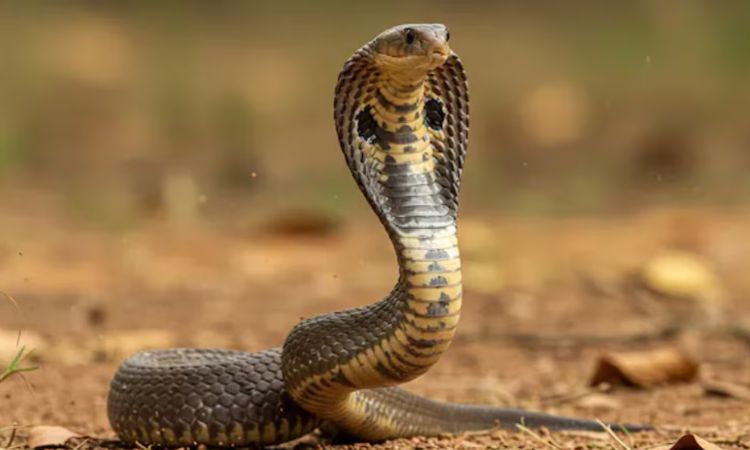
Types of Snakes
There are over 3,000 snake species worldwide, broadly categorized into two main groups based on their hunting methods:
- Venomous snakes: These possess specialized glands that produce venom, delivered through fangs. They use it primarily to subdue prey quickly. Examples include the cobra (various species like the Egyptian cobra or spitting cobras found in Africa and Asia) and the king cobra, the world’s longest venomous snake.
- Non-venomous snakes: These rely on constriction or overpowering prey. The python is a classic example—large constrictors like the African rock python can grow several meters long and squeeze prey to death.
Other distinctions exist within families: elapids like mambas and cobras, have fixed front fangs and often neurotoxic venom, while vipers have folding fangs and hemotoxic effects. Many colubrids are harmless or mildly venomous. Pythons and boas represent major non-venomous constrictor groups.
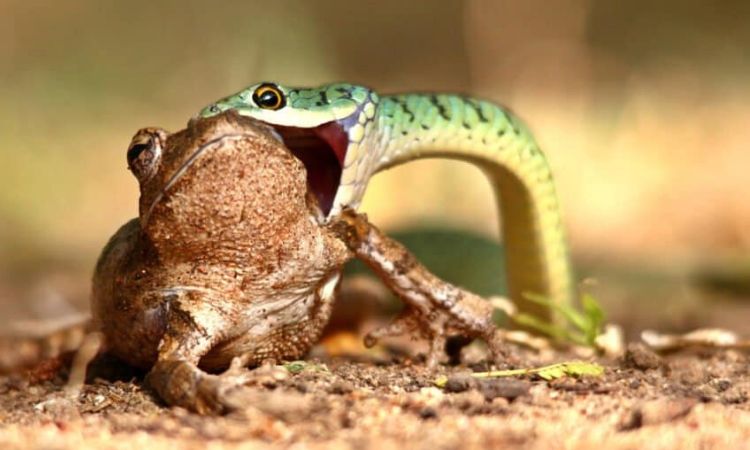
What Snakes Eat
All snakes are strict carnivores. Their diet varies by size, species, and habitat but commonly includes:
- Rodents (mice and rats) — a staple for many medium-sized snakes.
- Birds and their eggs.
- Insects and small invertebrates, especially for smaller or juvenile snakes.
- Other items like lizards, amphibians, fish, or even other snakes.
Larger species such as pythons can tackle bigger prey like antelope or wild pigs. Snakes swallow food whole without chewing, thanks to highly flexible jaws.
Digestion can take days or weeks depending on meal size and temperature. Some specialized snakes, like egg-eaters, have adapted to consume only eggs.
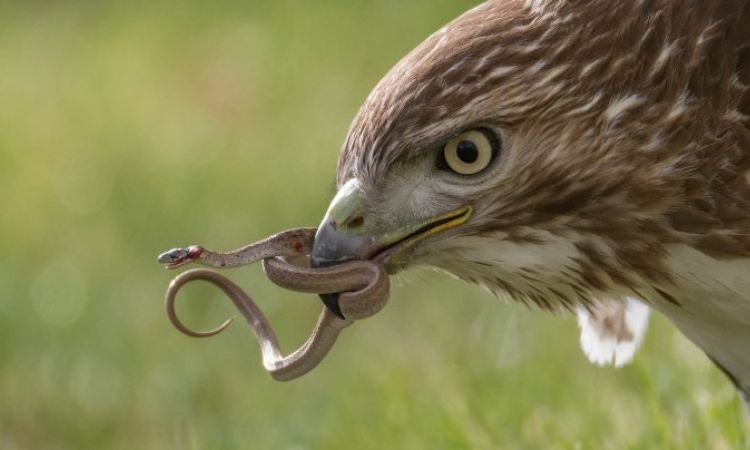
What eats snakes?
Snakes occupy a key place in food chains but face predators too. Birds of prey including eagles, hawks, & secretary birds, other predators include mongooses, honey badgers, larger snakes, crocodiles, and some mammals hunt them. In Africa, secretary birds famously stomp on snakes in the Serengeti and Kruger areas.
How Snakes Move
Without legs, snakes have evolved efficient locomotion using powerful muscles and scales for grip. The primary method is slithering via lateral undulation—creating S-shaped waves that push against the ground or objects.
Other styles include:
- Concertina movement: Accordion-like bunching and stretching, useful in tight spaces.
- Sidewinding: A sideways looping motion ideal for loose sand in deserts, minimizing contact with hot surfaces.
- Rectilinear progression: Straight-line “crawling” used by heavy-bodied snakes like pythons, where belly scales ripple forward independently.
These varied snake movement techniques allow them to navigate diverse terrains silently and effectively.
Venomous vs Non-Venomous Snakes
Venomous snakes inject venom—a modified saliva containing toxins that immobilize prey or defend against threats. Venom types include neurotoxins (affecting nerves, e.g., cobras and mambas, causing paralysis), hemotoxins (damaging blood and tissue, common in vipers), and others. Only about 10-15% of snake species are venomous to humans, and even fewer deliver fatal bites without treatment.
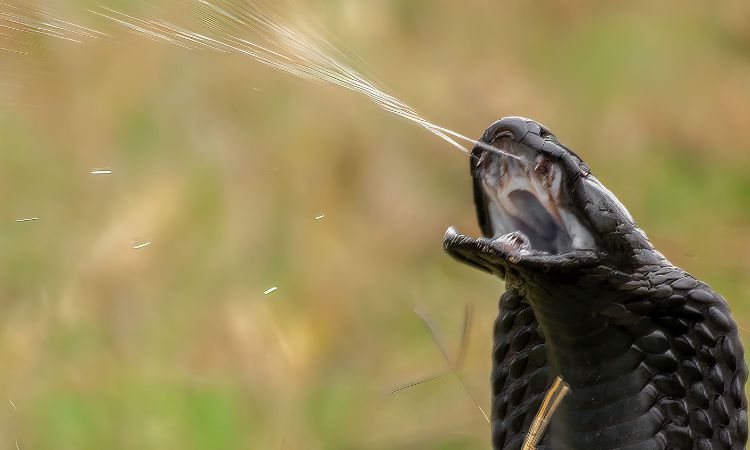
Non-venomous snakes lack potent venom or fangs for injection. They subdue prey through constriction (pythons wrapping and suffocating) or simple overpowering.
How to identify safely (general guidance only—never approach or handle wild snakes): From a safe distance, venomous species often show triangular heads (due to venom glands), elliptical pupils, or heat-sensing pits (in pit vipers).
However, these traits are not foolproof—many non-venomous snakes mimic them by flattening heads. The safest “identification” is respecting all snakes and maintaining distance.
In regions like Africa, learn local species through guided safari experts rather than risking close inspection. Antivenom exists for many bites, but prevention is key.
Do snakes have bones? Yes! Snakes have hundreds of bones—more vertebrae and ribs than humans—providing flexibility and strength. Their skulls feature movable bones for swallowing large prey.
Interesting Snake Facts
Here are some engaging snake facts to boost your knowledge:
- Snakes have no eyelids; their eyes are protected by a clear, fixed scale called a spectacle, giving them a perpetual stare.
- They use their tongue to smell—flicking the forked tongue collects scent particles, which are analyzed by the Jacobson’s organ in the mouth.
- Snakes can swallow prey whole, sometimes larger than their own head, thanks to stretchy ligaments and independent jaw movement.
- Some species can survive months without eating after a big meal.
- Certain snakes “fly” by gliding from trees (e.g., paradise tree snakes in Asia), though not common in Africa.
- They shed their skin periodically as they grow, emerging with brighter colors.
These adaptations make snakes highly efficient survivors.
Are Snakes Dangerous?
Most snakes are harmless to humans and play vital ecological roles by controlling rodent populations and serving as prey. Only a small percentage are venomous, and bites usually occur when snakes feel threatened or are accidentally stepped on.
In Africa, species like the puff adder (responsible for many bites due to camouflage) or black mamba demand respect, but with proper awareness during safaris in Serengeti National Park or Kruger National Park, encounters are rare and manageable.
Education and caution build trust—snakes are more afraid of us than we are of them. Always follow guide instructions on wildlife tours.
Snakes in Africa
Africa boasts incredible snake diversity across its habitats. In the Serengeti, visitors might spot rock pythons or various cobras amid the grasslands. Kruger National Park hosts over 50 snake species, including the black mamba (fast and neurotoxic), puff adder (camouflaged and hemotoxic), and non-venomous pythons.
These parks offer excellent opportunities to learn about snakes responsibly through expert-led game drives and walks. African snakes contribute to biodiversity by regulating prey populations in savannas, forests, and wetlands.
How to draw a snake: For creative fun, start with a simple curved line for the body in an S-shape. Add an oval head, small eyes, and a forked tongue.
Detail scales with diamond patterns along the body. For realism, shade the underside lighter and add curves for movement. Beginners can follow basic tutorials using the letter “S” as a base for a coiled or slithering pose.
FAQs About Snakes
Are all snakes dangerous?
No. Most are harmless and beneficial. Only a fraction are venomous, and even then, many avoid humans.
What do snakes eat?
Rodents, birds, eggs, insects, lizards, and more—depending on the species. They swallow prey whole.
Where do snakes live?
In forests, deserts, grasslands, wetlands, and many other habitats worldwide, including diverse African ecosystems.
How do snakes move?
Primarily by slithering with muscular waves, plus specialized methods like sidewinding or concertina for different terrains.
What eats snakes?
Predators include birds of prey, mongooses, honey badgers, other snakes, and crocodiles.
Snakes are remarkable reptiles that deserve appreciation for their role in nature. Whether you’re planning an African safari or simply exploring snake facts at home, understanding these creatures reduces fear and increases wonder.
Stay safe, respect wildlife, and enjoy the slithering diversity of the snake world!