
Are you curious about the sound achimpanzee makes? Wondering to which family of primates chimpanzees belong? A Chimpanzee (chimp) is a primate species belonging to the hominidae family also known as the great apes. It is a native to the tropical rainforests of Africa.
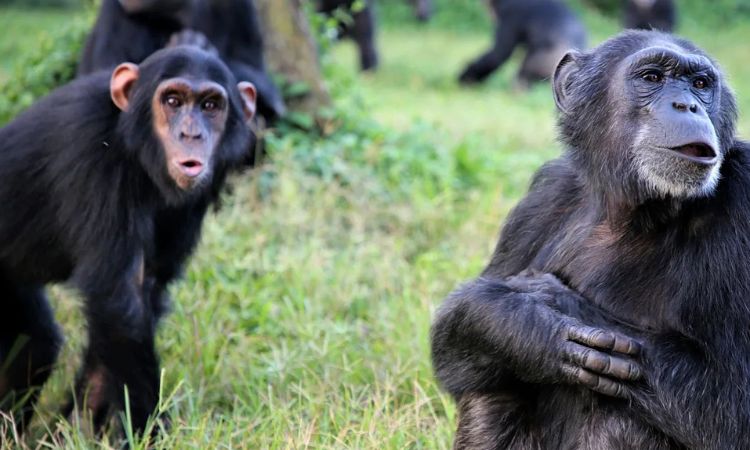
Quick facts about Chimpanzees;
Chimpanzees were first scientifically described in the 18th century and have been extensively studied since the 20th century by different primatologists such as Jane Goodall, who first studied them in one of their natural habitats in Tanzania’s Gombe Stream National park in the 1960s.
Chimpanzees are human’s closest relatives in the animal kingdom, sharing approximately 98% of human DNA. This is witnessed by their ability to use tools, problem-solving abilities and behaviors.
They are classified into two subspecies and that’s the common chimpanzees which are scientifically called Pan troglodytes and the bonobos also known as Pan paniscus.
The common chimpanzees are further divided into four recognized subspecies which include the central chimpanzees which are the widest spread chimp species and are found in the central African countries namely Gabon, Cameroon, and Congo.
The western chimpanzees found in west Africa occupying countries such as Guinea, Sierra Leone, Liberia, and Ivory Coast. These are critically endangered species with drastic reduction in numbers caused to poaching and habitat loss to human settlement and cultivation.
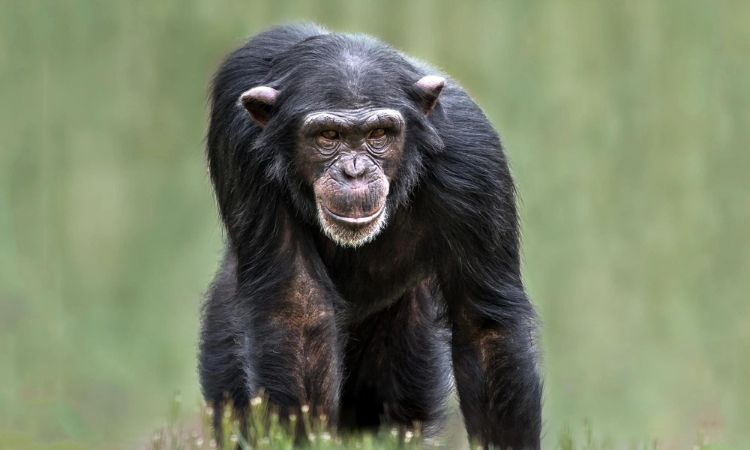
The Eastern chimpanzees occupying habitats of East Africa and are found in Uganda, Rwanda, Tanzania, and Democratic Republic of Congo. These have been extensively studied and are known for their tool use particularly in nut cracking and termite fishing.
The Nigeria-Cameroon Chimpanzees which are the smallest in numbers and less studied compared to other chimp species.
There is also the Bonobos chimp species which are found in the democratic republic of Congo, south of the Congo river. These are known to be peaceful compared to the aggressive common chimps.
Physical Characteristic of a Chimpanzee;
Chimpanzees have a variety of distinctive physical characteristics that differentiates them from other primate species like the monkeys and gorillas.
Chimpanzees have black or dark brown fur covering most of its body parts apart from their faces, fingers, toes, palms and the soles of their feet. Newly born chimp have pink faces which become brown with aging.
Chimps have hairless faces with a pronounced brow bridge, flat nose, prominent mouth, expressive eyes and larger ears.
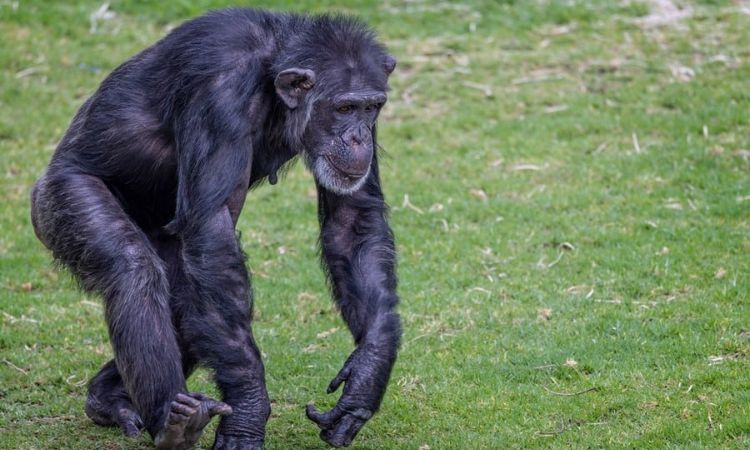
They have a medium strong body featured with long arms that are adapted for swinging from tree branches. Their arms are typically much longer than the legs which is a common characteristic found among different primate species.
Although their legs are shorter than the arms, they are generally stronger enabling them to walk with them although for a shorter distance. Their toes are feet and strong as well to help them grip branches. The long arms as well help them to knuckle walk, climb and swing through trees efficiently.
Chimpanzee Size;
Adult male chimpanzees are generally larger than females weighing about 40 to 60 kilograms (88 to 132 pounds) and the females about 32 to 45 kilograms (70 to 100 pounds). Chimps stand about 1 to 1.3 meters tall when upright.
Diet of Chimpanzees;
Chimpanzees are typically omnivorous, consuming a variety of plants and animals, mainly specific insects for nutrition. So, What do chimps eat?
Fruits is the primary component of their diet and prefer ripe juicy sweet fruits like mangoes, different berries, bananas, among others. They consume young, tender nutritious leaves from a variety of plant species, they eat seeds and nuts which offer them a rich source of fats and proteins.
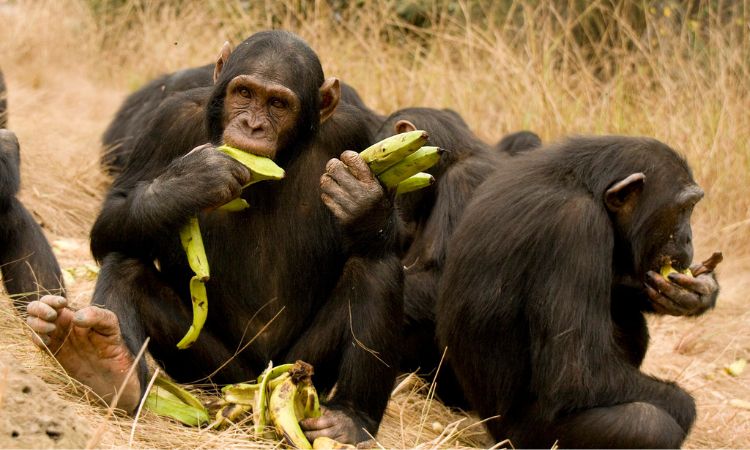
Chimps on occasions forage on flowers which are rich in nectar. During dry seasons, when food is scarce, chimps resort to eating tree barks and pith which less nutritious but only helping them to survive as they wait for better days.
Chimpanzees consume a variety of insects depending on their seasons and the most loved include the termites, ants, bee larva. They use various tools such as sticks to extract them from their nests.
They also love eating honey and they extract it from the beehives using sticks. Although on occasions, chimpanzees also hunt and eat small mammals such as birds, small antelopes, among others.
Chimpanzee diet varies seasonally, majorly depending on the availability of different foods. For example, during the wet seasons when fruits are seen everywhere in their natural habitats, they will consume much of them compared to other foods.
And during the dry seasons, they will rely more on the leaves, tree barks and other food sources which are less preferred.
Chimpanzee Breeding;
Chimpanzees reach sex maturity at around 8 to 10 years of age and females tend to mature slightly earlier than males. The ovulation period in females lasts about 36 days and this is witnessed by the swelling of the the anogenital area, which swells and becomes dark pink.
This sends a signal to the males that they are ready for mating. Females tend to be selective about their mating partners and most times prefer mating with the dominant males.
When females are very horny, they mate multiple times with different males in one day and prefer mating with the low ranking males to avoid inbreeding.
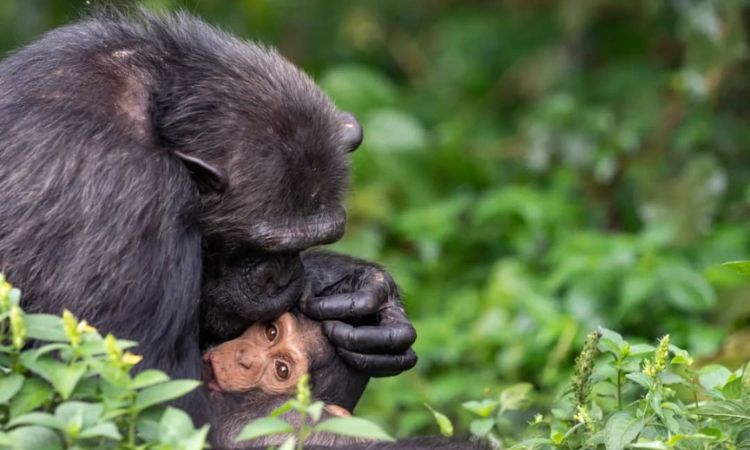
The gestation period of a chimp lasts for about 8 months and usually give birth to one infant. They reproduce after a period of about 3 to 5 years which allows them to give enough time of care for their current offspring before conceiving another.
The infants are highly dependent on their mothers for the first 3 to 5 years. This way, they learn the essential surviving skills, socializing and feeding in the jungles. Females chimpanzees continue to reproduce up to when they are about 40 years of age. Males reproductively extends throughout their adult life although they become less greedy about the mates compared the young ones.
Relationship of Chimpanzees with Humans;
Chimpanzees share approximately 98% of their DNA with humans which makes them our closest relatives. This genetic closeness is proven by their intelligence which enables them to use different tools and exhibit different complex social behaviors.
The close genetics with humans has made chimps to be used in different medical researches to study different human diseases and test treatments.
Chimps population is threatened by human encroachments, deforestation, poaching, cultivation, among others.
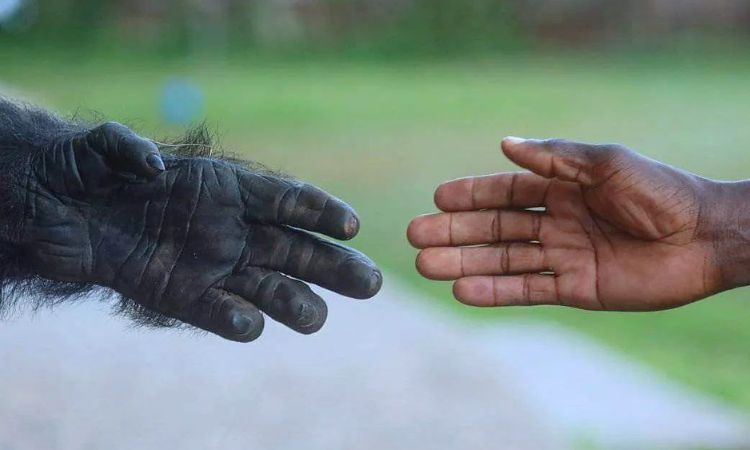
Wildlife organizations in different countries have opened up sanctuaries for rescued chimpanzees to provide them care and rehabilitation for individuals which are orphaned because of poaching and habitat losses.
The close genetics also makes them vulnerable to human diseases and vice versa such as the respiratory infections. However, the Conservationists have emphasized the importance of minimizing contact to reduce the potential risks.
Chimpanzee Distribution and Habitat;
In Uganda, chimpanzees are best seen at Kibale National Park located in western regions which is a home to over 1,500 individual chimps.
They are also tracked in Budongo Forest Reserve close to Murchison Falls National Park and at Queen Elizabeth National Park at Kyambura George.
In Rwanda, chimps re tracked at Nyungwe Forest National Park, one of Africa’s oldest natural tropical forest.
In Tanzania, chimpanzees are tracked at Gombe Stream National Park and at Mahale Mountains National Park. You may also like; Chimpanzee Tracking Parks?

Habitat Preferences for Chimpanzees;
Chimpanzees are highly adaptable primate species which enables them to thrive in various habitats but the most preferred include the tropical rainforests which are characterized with dense, evergreen forests which are a source for a variety of fruits which is a major part of their diet.
They also like inhabiting montane forests because of their cooler temperatures as they are found in mountainous regions. They also offer them a variety of food resources and keep them away from human disturbances.
Chimps as well inhabit savannahs and woodlands which are characterized with mixed habitats which include open grasslands, shrubs and trees.
However, these areas some with a low food availability and chimps living here have to adapt to a more varied diet and sometimes travel longer distances to different forests in search of nutritious foods.

This 3 Day Kibale Primate Safari will give you an exposure to the various primates in Kibale forest national park a home to over 1450 chimpanzees cosseted within the park and around 13 different species of primates that u may encounter as you carry out

4 Days Rwanda Gorilla Trekking and Chimpanzee Tour is short Rwanda safari taking you to Volcanoes for mountain gorilla trekking & Nyungwe forest for chimpanzees and canopy walk. This Africa wildlife safari to the “Land of a Thousand Hills” also

Our 5 Days Uganda Safari is a primates watching Africa holiday that involves Gorilla trekking in Bwindi and Chimpanzee trek in Kibale. The safari also takes you through Queen Elizabeth national park where you are legible of viewing tree-climbing lions…