African Buffalo: Facts, Weight, Diet, Habitat & Predators

Discover the incredible African buffalo, also known as the Cape buffalo. Uncover fascinating African buffaloes facts e.g their behavior, size & lifespan. The African Buffalo is a special species of animal found in Africa and happens to be Arica’s largest sub-Saharan bovine.

These Buffaloes are divided into distinct sub-species such as Cape buffaloes, forest buffaloes, the central African buffaloes, West African Savannah buffaloes and Southern savannah buffaloes. Among all these sub-species, the Cape Buffaloes are the largest bulls and can weigh up to 2000 pounds (907 Kg). 

African Buffaloes are categorized under the most dangerous animals in Africa and hence termed to as “black death”. The scientific name of the African buffalo is Syncerus caffer.

African Buffalo

Biological Subspecies African Buffalo:

Cape Buffaloes.

This is the most common and popular buffalo species in Africa. The Cape buffaloes are bigger in size compared to other African buffalo species. They are found in the Southern and Eastern parts of Africa.

The African Forest Buffalo.

This is the smallest sub-specie of the African buffaloes and is also known as the “dwarf buffalo” or the Congo buffalo. The size and formation of the forest buffaloes’ horns differentiate them from other species i.e., their horns are much smaller than those of other subspecies of the African buffaloes.

The Central African Buffaloes.

They are found in the rainforests of Central Africa in countries such as, Zimbabwe, Uganda, Tanzania, DRC, South Africa and Zambia.

The West African Savannah Buffaloes.

These are found along West Africa from the Southern parts of the Saharan desert i.e., in Ghana, south Senegal, North Guinea, Mali and Ivory Coast.
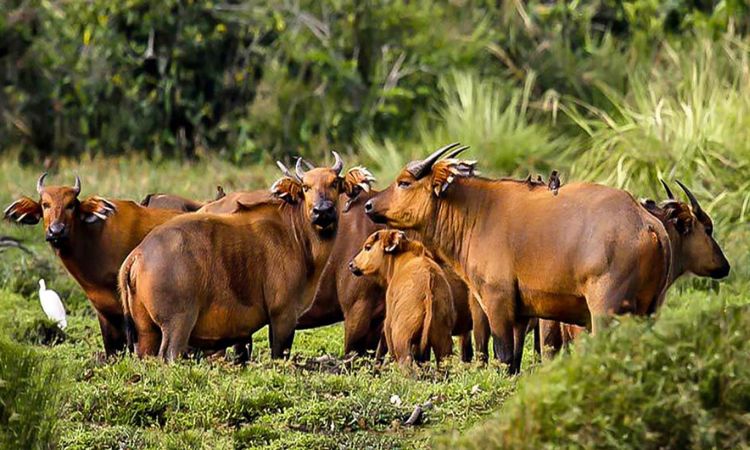
African Forest Buffaloes

12 Interesting Facts about African Buffalo;

  1. Scientific Classification: African buffaloes, scientifically classified as Syncerus caffer, exhibit distinct morphology, social behavior, and ecological adaptations, playing a vital role in shaping African ecosystems as large herbivores with a hierarchical structure and cooperative defense mechanisms.
  2. Social Life: African buffaloes are social animals in that they work and move together in herds of about 2000 individuals. Members of the same sub-group often sleep with their heads falling on each other. Buffaloes also have mutual grooming behaviors and cooperative defense strategies.
  3. Collective Decision-Making: African buffaloes use a voting system among themselves to determine the direction of migration. They move according to the direction where most members of the herd where pointing during the resting hours.
  4. Unique Behavior: Buffaloes have a tendency to kneel down and rub their necks and heads on the ground, especially when preparing to attack.
  5. Avian Associations: African buffaloes form a bond with different bird species like ox-peckers, which feed on insects found on their bodies and these birds often warn the buffaloes in case of danger ahead.
  6. Unforgiving Nature: Buffaloes are never forgiving and good at revenging to an extent that they can set an ambush on the hunters who have previously attacked them regardless of the time that has passed.
  7. Sensory Adaptations: Although they have poor eyesight during the day, African buffaloes compensate with highly active hearing and smelling senses, enabling them to detect the presence of predators like lions.
  8. Dominance Displays: Bulls engage in sparring matches, using their horns to hook, this is mainly done to test for dominance among the bulls.  
  9. Wallowing: Buffaloes often immerse their bodies in mud (mud bathing) to protect themselves from insect bites and regulate body temperature.
  10. Seasonal Births: African buffaloes give birth during rainy seasons when food and water are plentiful, providing optimal conditions for the survival of their calves.
  11. Formidable Fighters: Buffaloes have a reputation for being capable of killing hunters, with higher success rates compared to other wildlife species. They pose a significant threat to predators like lions and can emerge victorious in confrontations.
  12. Sexual Dimorphism: Male and female buffaloes can be differentiated by the presence of a shield-like structure called “the boss” between the horns of males, which is absent in females.

African Buffalo Size;

An African male buffalo can weigh up to 2000 pounds (907 Kg) and 6 ft tall and the female buffalo can weigh up to 1000 pounds 4-5 ft long. The African Buffalo calf can weigh 30-70 pounds at birth.

The Lifespan of African Buffalos;

The lifespan of the African buffalo can go up to 18-25 years in nature depending on the availability of pasture and water. They have a longer lifespan of about 29 years in captivity due to the fact that there are no threats like predators and other natural enemies.

African Buffalo Adaptations;

During the wet/rainy seasons, the buffaloes develop a thick woolen coat to prevent themselves from the cold winds and cool temperatures.

Syncerus caffer (African buffaloes) use grunts and bellows to communicate to each other.

Cape buffaloes always move always move in big herds of about 2000 individuals in order to protect themselves from predators.

The African buffaloes have adapted a relationship with some African birds for example the ox-pecker. This bird species sits on the buffaloes’ back and picks ticks and other parasite insects from the skins of these animals.

The body size and the formation of the adult male buffaloes’ horns are a major adaptation to protect themselves from the natural enemies like lions, leopards and hyenas.

African buffaloes large and broad hooves that help to give support to the massive body weight of the buffalo.

The African Buffaloes have an elongated tongue that they use to gather grass and other food stuffs in position for chewing.

African buffalo diet

Diet of the African Buffalos;

What do African buffalo eat?

The African buffaloes happen to be herbivores in that they often feed on grasses, plants and other vegetables. During the dry season when the vegetation is little, African Buffalos feed on shrubs, tubers and different roots.

To get the roots and tubers, the African buffaloes tend to dig them out from the soil. During hot days, buffaloes can consume 30-40 liters of water per day and they can eat up to 17 kg per day.

African Buffaloes Mating;

Male buffaloes are likely to mate with more than one cow while for the cows will only mate with one bull. There are only two breeding seasons among buffaloes per year.

The male calves become sexually mature at 3-4 years of age although the male adults in the herd prevent them from mating until they reach the 7-8 years.

Cows give birth to only one calf and birth always happens during the rainy seasons when there is enough food for the born calves.

Habitats of the African Buffaloes;

African Buffaloes Habitat is mainly the savannah grasslands, rainforests and woodlands of Africa just for easy access to food and water.

Savannahs and grasslands happen to be the most common habitats for this special species due to the fact that there is enough pasture for the animals, presence of tall grasses which act as habitats and hiding places for the animals from the predators.

List of African National Parks to See Buffaloes;

  1. Kruger National Park, South Africa
  2. Serengeti National Park, Tanzania
  3. Kidepo Valley National Park, Uganda
  4. Masai Mara National Reserve, Kenya
  5. Chobe National Park, Botswana
  6. Hwange National Park, Zimbabwe
  7. Queen Elizabeth National Park, Uganda
  8. South Luangwa National Park, Zambia
  9. Etosha National Park, Namibia
  10. Murchsion Falls National Park, Uganda
  11. Amboseli National Park, Kenya
  12. Mana Pools National Park, Zimbabwe.

These are the best parks that offer incredible opportunities to observe cape buffaloes in their natural habitats, along with a diverse array of other wildlife species.

Best Africa Safaris to See Buffaloes;

3 Days Queen Elizabeth National Park Safari

4 Days Queen Elizabeth Safari, Uganda

The 4 days Queen Elizabeth Wildlife Safari Uganda is an exceptional wildlife safari tour crafted for you to get the best of Queen Elizabeth National Park while on a Uganda safari. It includes a game drive, boat cruise, sighting the...

Serengeti National Park

3 Days Serengeti Safari, Tanzania

Nothing gets you such a mesmerizing African wilderness experience like immersing yourself into the endless savanna plains of Serengeti National Park. 3 days Serengeti National Park is with no doubt one of the most exceptional Tanzania...

3 Days Masai Mara Safari

3 Day Masai Mara Safari, Kenya

Embark on a 3 day Masai Mara safari from Nairobi and enjoy an unforgettable Kenya wildlife experience that involves Big 5 game, birding and immerse yourself in local culture while staying in luxurious accommodation all...

African Buffalo Predators and Threats;

The main threat to the African buffaloes happens to be human activities such as poaching, settlements which may lead to loss of the animals’ habitats.

The African buffalos are threatened by several predators such as lions, Nile crocodiles and hyenas. The Nile crocodiles are most capable of killing the adult buffaloes while lions hyenas and leopards are mostly interested in calves which are not so strong.

However, these predators find it so difficult to win and kill the adult buffalos during fights due to the fact that the buffalos are so much powerful and use their horns effectively for defense.

African Buffalo vs Lion;

Fights between African buffalo and lion one on one are likely to end when the lions are killed.

African Buffalo Conservation Status;

Habitat loss is one of the threats to the African buffaloes. In order to prevent this, wildlife authorities from different countries have ensured proper reservations of habitats for these animals.

Armed park rangers have been employed to look after the animals and protect them from poachers and the predators. Rangers on certain occasions have exchanged fire with poachers and at times lost their lives, read wildlife news for scenarios.

Tight security has been put at the boundaries of reserved areas in order to prevent illegal human settlements in the premises of animal habitats.

Restriction fences have been built to prevent the predators from getting access to the African buffaloes.

High fine charges have been imposed to whoever is caught poaching with in the reserved areas in order to reduce poaching.

Lastly, authorities have engaged with locals living on the outskirts of protected areas, employed them, sensitized them about the importance of these animals and also helped them diversify from hunting and nomadic farming.

You can read more about Elephant, Rhino and Buffalo Research and Conservation here.

Cape Buffalo

Frequently Asked Questions about African Buffalos;

The human activities such as hunting African buffaloes for meat and trophies have led to the decrease of the buffaloes in population, hence making the African Buffaloes an endangered species of animals.

The most popular species of buffaloes found in Africa are the Cape Buffaloes.

The African buffalo meat is often red and is said to taste like that of the domestic cattle although it happens to be tastier and heathier. However, it is illegal to sell buffalo meat and once caught, one can be charged of poaching.

The African Buffalo has the longest gestation period among other animals in the bovine family. The gestation period is 340days which is equivalent to 11months. Calves usually weigh 50-90 pounds and after birth, the mother buffalo nurses its calf 1-2 years.

Yes, African buffaloes are related to domestic cows as they belong to the same family, Bovidae, which includes both domestic cattle (cows) and various wild bovine species. Cape buffaloes and cows share a common evolutionary lineage and have similar physiological characteristics.

An adult African buffalo bulls height is around 1.3 to 1.7 meters (4.3 to 5.6 feet) tall at the shoulder, body length ranging from 2.4 to 3.4 meters (7.9 to 11.2 feet) and weigh between 500 and 907 kilograms (1,100 to 2,000 pounds).

African buffaloes (Cape Buffaloes) are considered to be one of the most dangerous and unpredictable wild animals in Africa. When threatened, African buffaloes can exhibit aggressive behaviors such as charging, goring, and even trampling.Â