
Kidepo Valley National Park Uganda, Your True African Wilderness
Kidepo Valley National Park: There is a place in Uganda so remote, so raw, and so spectacularly wild that the travellers who make it there almost universally describe the same reaction: disbelief that something this magnificent exists and that so few people know about it.
Kidepo Valley National Park sits in the extreme northeastern corner of Uganda, deep within the Karamoja region, and it is consistently ranked among the finest national parks in all of Africa, not by tourist numbers, but by the calibre of wildlife, the vastness of untouched savannah, and the extraordinary sense of isolation that only a park this far from the conventional tourist trail can deliver.
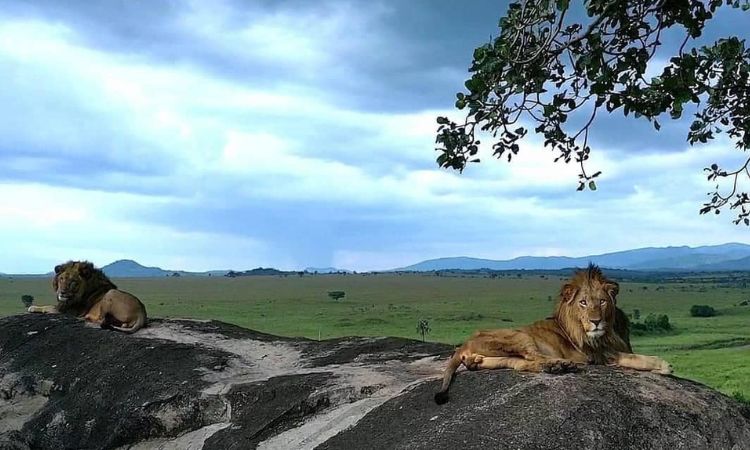
If you have been searching for Kidepo Valley National Park photos online and wondering whether the landscape is truly as dramatic as it appears, the answer is yes, and the real thing is better.
Kidepo Valley National Park Location: Where Exactly Is This Park?
Kidepo Valley National Park is located in Kaabong District in the northeastern corner of Uganda, within the remote and semi-arid Karamoja sub-region.
The park sits in two river valleys, the Narus Valley in the south and the Kidepo Valley in the north and its coordinates range between 3°50’N to 4°15’N latitude and 33°40’E to 34°10’E longitude, placing it in a dramatic stretch of the Eastern Rift Valley landscape where Uganda, South Sudan, and Kenya converge.
The park’s northwestern boundary runs directly along the international frontier with South Sudan and abuts South Sudan’s Kidepo Game Reserve, while its eastern edge sits just 5 kilometres from Kenya’s Northern Frontier District.
This tri-border geography gives Kidepo a landscape that feels genuinely continental — not a managed safari zone with visible boundaries, but a wild, horizon-wide savannah that extends beyond every fence and every map edge into the greater East African wilderness.
Which district is Kidepo National Park in? It falls within Kaabong District, specifically in Karenga Sub-County. Kaabong District is one of Uganda’s most northerly administrative areas, and the town of Kaabong itself serves as the last significant service stop before the final approach to the park’s Apoka headquarters.
The Karamoja region that surrounds the park is home to the semi-nomadic Karamojong people, whose traditional pastoral culture, cattle herds, elaborate beadwork, the manyatta homestead forms a compelling human backdrop to the wildlife experience within the park.
What Does the Name Kidepo Mean?
One of the most frequently asked questions about this park — what does the name Kidepo mean? — has a fascinating answer rooted in Karamojong language and local history.
The word “Kidep” comes from the Karamojong language and means “to pick,” referring to the area’s historical role as a hunting and fruit-gathering ground for the local communities who lived here for generations before the park was gazetted.
The story of how “Kidep” became “Kidepo” is equally interesting. During the regime of President Idi Amin, who loved this park so greatly that he reportedly wished to rename it “Queen Elizabeth 2 National Park,” the local communities respectfully requested it retain its original cultural name.
Over time, people from different linguistic backgrounds pronounced the word “Kidep” incorrectly, gradually softening the hard final consonant to an open vowel — “Kidepo” — until the mispronunciation became the universally accepted name.
Today the name Kidepo is recognised worldwide as one of Africa’s great safari destinations, even if its origin in a simple Karamojong word for gathering and picking remains largely unknown to the visitors who come to photograph its lions and cheetahs.
Kidepo Valley National Park Size, History, and Conservation
Covering 1,442 square kilometres of montane and savannah terrain, Kidepo Valley National Park is Uganda’s third largest national park, surpassed only by Murchison Falls and Queen Elizabeth.
It straddles the Karamoja region at an elevation dominated by Mount Morungole, which rises to 2,750 metres above sea level and forms the park’s dramatic eastern skyline.
The park is transected by the Kidepo and Narus rivers — both seasonal in character, retreating to pools during the dry months and creating the concentrated wildlife viewing around permanent water that makes the dry season so exceptional for game drives.
The park was gazetted as a game reserve by the British colonial government in 1958 and formally established as a national park in 1962 to protect the extraordinary diversity of its wildlife species.
Today it is managed by the Uganda Wildlife Authority and has been ranked by CNN Travel and multiple international safari publications among the top three national parks in Africa, a recognition that reflects the park’s density of predators, the rarity of several species found here, and the near-complete absence of the overcrowding that diminishes game viewing in more popular East African parks.
Kidepo National Park Animals: What Wildlife Will You See?
Kidepo Valley National Park is home to approximately 77 species of mammals, making it one of the most faunally diverse parks in Uganda despite its relative remoteness.
Among the major tourist attractions in Kidepo National Park are the predators: lions, leopards, and cheetahs are all present, making Kidepo one of the very few parks in East Africa where you can encounter all three large cats in the same visit.
The spotted hyena and the striped hyena, the latter being exceptionally rare in Uganda, both roam the Narus Valley. The caracal, bat-eared fox, aardwolf, and African wild dog are among the rarer carnivores that make Kidepo exceptional for predator enthusiasts.
Large mammals found in Kidepo that are absent from Uganda’s other parks include the Beisa oryx, lesser kudu, and Burchell’s zebra — giving the park a distinctive East African savannah character that sets it apart from the forests and rift valley grasslands of western Uganda.
Rothschild’s giraffes roam the open savannah alongside enormous African elephant herds, buffalo in large aggregations, and a diverse antelope community comprising Uganda kob, eland, Jackson’s hartebeest, Defassa waterbuck, bohor reedbuck, oribi, bushbuck, dik-dik, and klipspringer.
Among the unusual and rarely seen Kidepo national park animals that excite experienced safari travellers are the aardvark, pangolin, bush pig, and Günther’s dik-dik — all of which appear in Kidepo but are genuinely difficult to find across the continent’s broader game park network.
The Narus Valley’s permanent water source, the park’s primary dry season wildlife concentration point, draws elephants, giraffes, and buffalos in the hundreds during the peak dry months, creating game drive experiences that rival anything on offer in the Serengeti or the Maasai Mara.
Birds of Kidepo Valley National Park: A Birder’s Frontier Destination
With over 475 documented bird species, Kidepo Valley National Park is one of Uganda’s premier birding destinations and is second only to Queen Elizabeth National Park in terms of avian diversity. However, for serious birders pursuing Afrotropic specials and arid-zone species found nowhere else in Uganda, Kidepo is unambiguously the most important birding site in the country.
Species found in Kidepo that are absent or rare in Uganda’s other parks include the ostrich — Africa’s largest bird, easily spotted on game drives through the Narus and Kidepo valleys — the Kori bustard, Karamoja apalis, black-breasted barbet, violet-tipped courser, Ethiopian swallow, fox kestrel, stone partridge, yellow-billed shrike, and standard-winged nightjar.
The park’s northern Abyssinian acacia habitat supports species typical of Ethiopia and the Horn of Africa that reach their southern range limit in Kidepo, making the park a genuine biogeographic frontier for bird distribution in East Africa.
Additional species recorded across Kidepo’s diverse habitats, from the borassus palm forest of the Kidepo River valley to the rocky slopes of Mount Morungole include the pygmy falcon, superb starling, scarlet-chested sunbird, red-winged lark, white-billed buffalo weaver, singing bush lark, African grey flycatcher, white-faced scops owl, black-headed plover, speckled-fronted weaver, Abyssinian and rufous-crowned rollers, red-pate cisticola, yellow-rumped seedeater, Clapperton’s francolin, marsh tchagra, and many others.
For a dedicated Kidepo Valley National Park birding safari, a four to five day visit during the wet season (March to May or October to November) delivers the highest species counts as migrants arrive and resident breeders are most active.
Major Tourist Attractions in Kidepo National Park: Beyond the Game Drive
Game drives in Kidepo Valley National Park are the experience that most visitors come for, and they do not disappoint. Conducted in a 4×4 safari vehicle and lasting two to three hours per session, morning and evening game drives through the Narus Valley deliver consistently excellent predator and large mammal sightings.
The valley’s network of game tracks passes through open grassland, acacia woodland, and riverine forest habitats, with a water hole near Apoka camp that functions as a 24-hour wildlife congregation point throughout the dry season.
Bird watching in Kidepo is the second major activity, and the camp’s immediate surroundings including a small permanent water hole at the edge of Apoka that attracts swallows, seed eaters, and yellow-rumped seedeaters, deliver rewarding observations without leaving camp.
The thorny trees around the lodge regularly host silver birds and small bands of yellow-billed shrikes, and the mouse-coloured penduline tit appears reliably in the acacia scrub nearby.
Hiking in Kidepo National Park offers access to the Lamoj Mountains, beginning a few kilometres from the park headquarters, with trails that reward hikers with panoramic views across the Narus Valley and into the Kidepo Valley beyond.
The Kanangorok hot springs, also called Kanatarok are located just 11 kilometres from the main park area near the South Sudanese boundary and are a warm, lukewarm natural hot spring worth visiting as part of a guided excursion. The springs represent a permanent water source in an otherwise seasonal landscape, and the birdlife around them is outstanding.
Nature walks in Kidepo are guided experiences that depart from Apoka camp on established trails and circuits, bringing visitors into close-range contact with smaller mammals, reptiles, and birds that game drives miss entirely. A guided nature walk in the acacia woodland around the camp is often where visitors have their most memorable close-encounter moments with Kidepo’s wildlife.
Cultural encounters with the Karamojong community are among the most distinctive and most moving experiences in Uganda safari tourism.
The Karamojong are one of East Africa’s last truly traditional pastoral societies, and a visit to a manyatta, the traditional homestead — alongside participation in or observation of the Apiti dances, the Emuya performances of the Nyangia and Napore ethnic groups, and the daily rhythms of cattle herding culture, provides a depth of cultural engagement that most Uganda safari itineraries cannot match.
This community encounter in Kidepo is a major tourist attraction in its own right, entirely separate from the wildlife, and it gives the park a human dimension that enriches the entire experience.
Kidepo Valley National Park Tickets: Entry Fees Explained
Kidepo Valley National Park tickets are issued by the Uganda Wildlife Authority, which manages all ten of Uganda’s national parks and sets entry fees that apply per person per day. Entry fees are valid for 24 hours, and any additional time beyond that window is charged at a further day’s rate.
The current Kidepo Valley National Park entry fees are structured as follows:
For adults: Foreign non-residents pay USD 40 per person per day. Foreign residents (holding a valid Uganda work permit) pay USD 30 per person per day. East African Community citizens pay UGX 20,000 per person per day.
For children: Foreign non-resident children pay USD 20 per person per day. Foreign resident children pay USD 10 per person per day. East African Community citizen children pay UGX 5,000 per person per day.
For students: Uganda pupils and school students pay UGX 3,000 each. Tertiary and university students pay UGX 5,000 each. Uganda Wildlife clubs pay UGX 2,000 per person.
Annual passes are available for frequent visitors. A single foreign non-resident annual pass costs USD 350. An annual pass for a foreign non-resident couple costs USD 600. A family pass (foreign non-resident, with up to four children) costs USD 800. East African member single annual passes cost UGX 350,000.
Vehicle fees apply separately: 4×4 safari vehicles and tour company cars pay USD 150 for foreign-registered vehicles and UGX 30,000 for East African registered ones. Park entry fees do not include activity fees — guided nature walks, bird watching excursions, and cultural community visits are charged additionally.
Children below the age of 5 years are exempted from all park entry fees. Pilots transiting the Apoka airstrip pay no entry fees if their stay is under two hours; stays exceeding two hours attract the standard daily rate.
Distance from Kampala to Kidepo Valley National Park
The distance from Kampala to Kidepo Valley National Park by road ranges from approximately 510 to 792 kilometres depending on the route chosen, making this the most distant of all Uganda’s major national parks from the capital.
This remoteness is both the park’s greatest practical challenge and the source of the extraordinary sense of unspoiled wilderness that rewards every visitor who makes the journey.
The northern route via Gulu and Kitgum — Kampala – Karuma – Gulu – Kitgum – Kaabong – Kidepo — covers approximately 571 kilometres and takes around 10 hours driving time, making it the shortest and most popular route to the park. The road is largely tarmac as far as Kitgum, with the final stretch from Kaabong to the park on rougher murram road.
Highlights along this route include a possible stop at Ziwa Rhino Sanctuary approximately 190 kilometres from Kampala, and the option to overnight in Gulu or Kitgum to break the journey.
The eastern route via Moroto — Kampala – Mbale – Soroti – Moroto – Kotido – Kaabong – Kidepo — covers approximately 792 kilometres and takes 12 to 13 hours, but offers the richest cultural and landscape experience, passing through the eastern highlands, across Karamoja’s vast semi-arid plains, and through communities that offer an immersive introduction to the region before you even reach the park gate.
A third route via Lira and Kotido — Kampala – Karuma – Lira – Kotido – Kaabong – Kidepo — covers approximately 705 kilometres in around 12 hours, offering breathtaking views of the Labwor Hills and the massive, bare Alerek rock approximately 55 kilometres from Kotido.
By air, scheduled and charter flights from Entebbe International Airport or Kajjansi Airstrip connect to Apoka airstrip within the park. Aerolink Uganda operates the scheduled service, with flights departing Entebbe at 12:30 and arriving at Kidepo at 14:45 — a journey of two hours and fifteen minutes that compresses a full day’s road travel into a scenic mountain flight over northern Uganda’s dramatic landscape. The return flight departs Kidepo at 15:00 and arrives at 16:30.
Best Time to Visit Kidepo Valley National Park
Kidepo Valley National Park is an all-year safari destination with no genuinely bad season, but the different times of year offer distinctly different experiences that suit different visitor priorities.
The dry season, June to September and December to February, is widely regarded as the best time to visit Kidepo National Park for game drives and general wildlife viewing.
Reduced vegetation makes animals more visible, the Narus River retreats to pools that concentrate wildlife dramatically, and tracks are passable in all conditions.
Predator sightings are most reliable during the dry months when lions and cheetahs are most active and visible around the water holes.
The wet season, March to May and October to November, transforms Kidepo into a lush, green landscape with active birds, new calves, and migratory species arriving from across the region.
For serious bird watching in Kidepo National Park, the wet season delivers the highest species diversity and the most active breeding behaviour. Accommodation rates are often lower during these months and park crowds — already minimal by any African park standard, thin even further, giving wet season visitors a level of exclusivity that is simply unavailable anywhere in the more famous East African parks.

Where to Stay in Kidepo Valley National Park: Accommodation Options
Kidepo Valley National Park accommodation spans a range of comfort levels to suit different budgets and travel styles, all centred around the Apoka area near the park headquarters.
Apoka Safari Lodge is the park’s premier luxury option, a celebrated property offering beautifully appointed en-suite cottages with sweeping views across the Narus Valley.
It is one of Uganda’s finest safari lodges and sits perfectly positioned for early morning game drives into the valley below. Nga’Moru Wilderness Camp provides high-quality mid-range tented accommodation with an authentic bush atmosphere and excellent guiding.
Apoka Rest Camp, operated by the Uganda Wildlife Authority, offers budget-friendly self-catering bandas and campsite facilities for travellers who want direct access to the park at the most accessible price point.
Book Your Kidepo Valley National Park Safari Today
Kidepo Valley National Park is not the easiest park to reach. That is precisely the point. The distance from Kampala, the rough final stretch of road, and the genuine remoteness of the Karamoja region filter out the casual visitor and leave the park for those who have decided that the greatest wildlife experience in East Africa is worth the extra effort it takes to get there.
Those travellers are never disappointed. The lions of Kidepo are not watched from a queue of minibuses. The cheetahs are not photographed through a crowd of competing telephoto lenses.
The ostriches and giraffes move across a savannah that, in every direction, looks exactly as it has looked for ten thousand years. That is the promise of Kidepo Valley National Park — and it is a promise the park keeps every single time.
Book your African safari to Kidepo Valley National Park today and discover for yourself why Africa’s finest wilderness is waiting for you in the far northeastern corner of Uganda.
Book your African Safari to Kidepo Today
