
Samburu National Reserve – Park Fees, Accommodation, & more
Samburu National Reserve is one of Kenya’s most iconic safari destinations, famed for its rare wildlife, dramatic landscapes, and unique species you won’t easily see elsewhere.
Located in Samburu County in northern Kenya along the Ewaso Ng’iro River, this reserve offers unmatched wildlife viewing, authentic Samburu culture, and thrilling game drives in a less crowded setting compared to more popular Kenya national parks like the Maasai Mara.
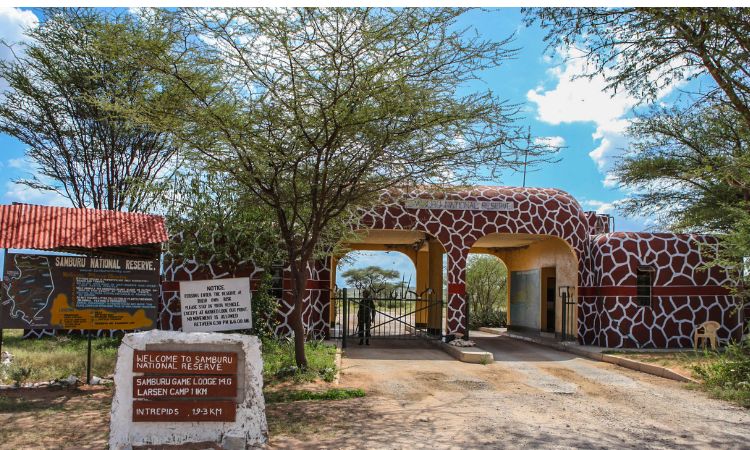
Whether you’re planning your first African safari or seeking something off the beaten path, Samburu National Reserve delivers an authentic, adventurous experience with its semi-arid wilderness, towering doum palms, and the famous “Samburu Special Five” animals.
Where Is Samburu National Reserve & How to Get There
Samburu National Reserve is situated in northern Kenya, in Samburu County, approximately 345 km (214 miles) north of Nairobi. It lies along the Ewaso Ng’iro River, which forms its southern boundary and separates it from the adjacent Buffalo Springs National Reserve.
The reserve covers an area of about 165 square kilometers (63 square miles) of rugged, arid terrain with acacia-dotted plains, rocky hills, and riverine forests.
Samburu National Reserve map
How to get there:
- By road — The most common option is a 5- to 6-hour drive from Nairobi via the A2 highway through Thika, Nanyuki, and Isiolo to Archer’s Post. The route is mostly tarmac until Isiolo, then gravel/dirt roads into the reserve—best in a 4×4 vehicle. Transfers from Nairobi or the Mount Kenya region (e.g., Nanyuki) take similar time.
- By air — Scheduled or charter flights from Nairobi (Wilson Airport) to airstrips like Samburu or Kalama (about 1 hour). This is popular for luxury safaris to avoid long drives.
- Nearest towns: Isiolo (gateway town) and Archer’s Post.
- Nearest airport: Nanyuki or Isiolo for road connections.
Road conditions can be rough during rains, so air charters are recommended for comfort.
What Makes Samburu National Reserve Unique
Samburu National Reserve stands out for its dry, rugged landscapes and rich riverbank ecosystem along the permanent Ewaso Ng’iro River, which attracts wildlife year-round. Unlike the lush plains of the Maasai Mara, Samburu’s semi-arid environment features dramatic rocky outcrops, doum palms, and thorny acacia, creating a stark, beautiful contrast.
It sees far fewer crowds than southern parks, offering a more intimate safari experience. The reserve is also deeply tied to Samburu culture, with opportunities to visit local communities and learn about their traditions.
This combination of rare wildlife, authentic culture, and seclusion makes it special for travelers seeking something beyond the standard safari.
Wildlife Highlights
Samburu National Reserve is renowned for its diverse and unique animals. While it doesn’t have all of the traditional Big Five (lion, leopard, elephant, buffalo, and rhino—rhino is absent here), it boasts four of them: lions, leopards, elephants, and buffalo. Predators like cheetahs and packs of wild dogs add excitement.
The real stars are the Samburu Special Five (or Northern Five), rare species largely endemic to northern Kenya:
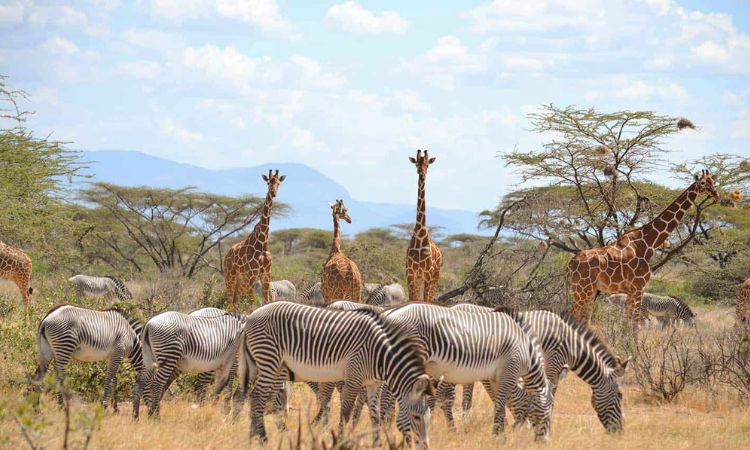
- Grevy’s zebra — The largest zebra with narrow stripes, endangered and iconic to Samburu.
- Reticulated giraffe — Striking geometric patterns, taller and more vividly marked than other giraffes.
- Somali ostrich — Blue-legged and larger, often seen in pairs or small groups.
- Beisa oryx — Elegant antelope with long, straight horns adapted to arid conditions.
- Gerenuk — The “giraffe-necked” antelope that stands on hind legs to browse high foliage.
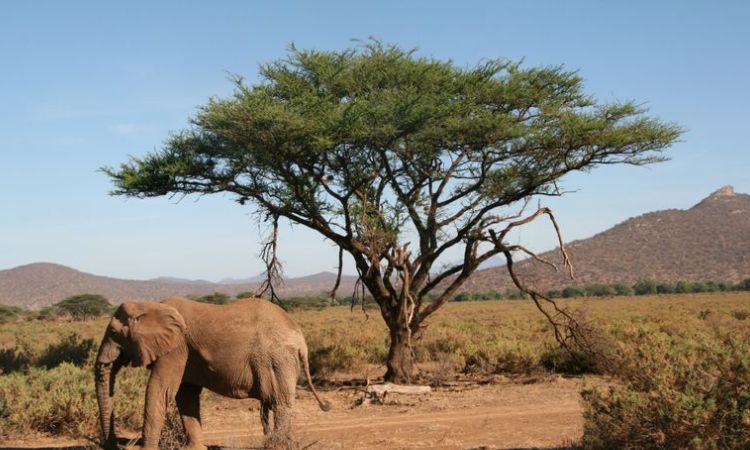
Other highlights include large elephant herds, prides of lions, elusive leopards, cheetahs, hippos and crocodiles in the river, and over 450 bird species.
Best Time to Visit Samburu National Reserve
Samburu is a year-round destination thanks to the permanent river, but timing affects wildlife viewing and comfort.
- Dry season (June–October and December–February) — Best for game viewing. Animals concentrate around the Ewaso Ng’iro River, making sightings easier. Clear skies, temperatures 30–35°C (86–95°F) daytime, cooler nights. July–September and January–February are peak for predators and herds.
- Short rains (November–December) — Greener landscapes, fewer crowds, good birdwatching, but occasional showers.
- Long rains (March–May) — Lush scenery, newborn animals, but muddy roads and some areas less accessible.
For optimal wildlife and photography, aim for the dry months.
Activities & Experiences in Samburu
Beyond standard game drives, Samburu offers:
- Game drives — Morning, afternoon, and night drives for big cats.
- Bird watching — Over 450 species, including endemics.
- Cultural visits — Interact with Samburu communities, see traditional dances and villages.
- Nature walks — Guided walks for closer flora/fauna views.
- Photo safaris — Specialized for golden hour shots along the river.
These capture long-tail searches like “bird watching in Samburu” or “cultural tours in Samburu.”
Where to Stay: Samburu National Reserve Accommodation
Options range from luxury to budget, many with river views.
Luxury Lodges — Saruni Samburu (stunning views, community focus), Sasaab (opulent tents), Elephant Watch Camp (eco-luxury).
Midrange Camps — Samburu Sopa Lodge (spacious, quiet location), Ashnil Samburu Camp, Samburu Intrepids Tented Camp.
Budget Options — Sentrim Samburu Lodge or basic campsites.
Many are inside the reserve or nearby conservancies, offering family-friendly properties and sand river access.
Samburu National Reserve Park Fees & Costs 2026
Samburu National Reserve park fees 2026 (per 24 hours, based on latest info):
- Non-residents: USD 85 per adult, USD 50 per child (under 12).
- East African residents: KSh 1,600 adult.
- Kenyan citizens: KSh 800 adult.
Vehicle fees: Around KSh 1,600 for cars.
Additional costs: Game drives/guides, often included in packages, accommodation (USD 200–800+ per night), air charters. Longer stays may offer discounts. Always confirm via official sources like Kenya Wildlife Service (KWS), as fees can update.
Transportation & Logistics
Road transfers from Nairobi require 4x4s due to gravel sections. Air charters are faster and more comfortable. Inside the reserve, use open 4×4 safari vehicles with guides. Prepare for hot, dusty conditions.
Safety & Travel Tips
- Wear neutral colors, long sleeves/pants for sun/insects.
- Malaria zone: Use prophylactics, repellents.
- Safari etiquette: Stay in vehicle, quiet, no off-road driving.
- Camera gear: Telephoto lenses (200–600mm), binoculars essential.
Photography Tips
Capture golden hour along the river for dramatic lighting on elephants or giraffes. Use wide angles for landscapes, telephoto for wildlife. Early mornings and late afternoons yield best results.
FAQ about Samburu National Reserve
What animals are unique to Samburu?
The Samburu Special Five: Grevy’s zebra, reticulated giraffe, Somali ostrich, Beisa oryx, gerenuk.
How far is Samburu from Nairobi?
About 345 km, 5–6 hours by road.
Is Samburu worth visiting?
Yes—unique wildlife, fewer crowds, cultural depth make it exceptional.
Can I do a day trip to Samburu?
Possible but rushed; better for 2–3 days minimum.
What’s the best time for wildlife viewing?
Dry season (June–October, December–February).
What are the Big Five in Samburu National Reserve?
Lion, leopard, elephant, buffalo (rhino absent).
Which is better, Samburu or Amboseli?
Samburu excels in rare species, seclusion, and culture; Amboseli shines for massive elephant herds and Kilimanjaro views. Samburu suits repeat visitors seeking uniqueness; Amboseli for classic scenery.
What is the most famous game reserve in Kenya?
The Maasai Mara National Reserve, renowned for the Great Migration and abundant predators.